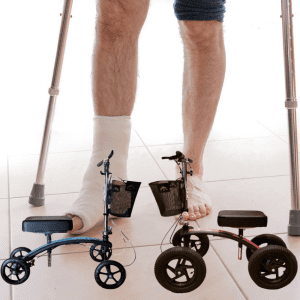
Most people don’t research knee scooters until after they’re told they can’t put weight on one foot. At that point, recovery is already underway, and getting from room to room suddenly becomes a challenge.
For most foot and ankle injuries, a knee scooter is worth it. It costs less than the frustration and upper-body strain that crutches can cause. Additionally, it makes everyday life a lot easier.
But “worth it” depends on more than the price tag. Your injury, living situation, and whether you’re renting or buying can all change the equation.
What Problem Is A Knee Scooter Actually Solving?
A knee scooter exists to solve the problem of staying mobile when one leg can’t touch the ground for weeks at a time. But how does it compare to the alternatives?
- Crutches solve this problem, technically. However, they do it by transferring your body weight onto your arms, wrists, and shoulders, which were never built to carry it for many hours a day.
- A walking boot doesn’t solve it at all if your doctor has ordered zero weight on the foot.
- A wheelchair solves it, but it also takes away the ability to move yourself around independently in tight spaces like a bathroom or kitchen.
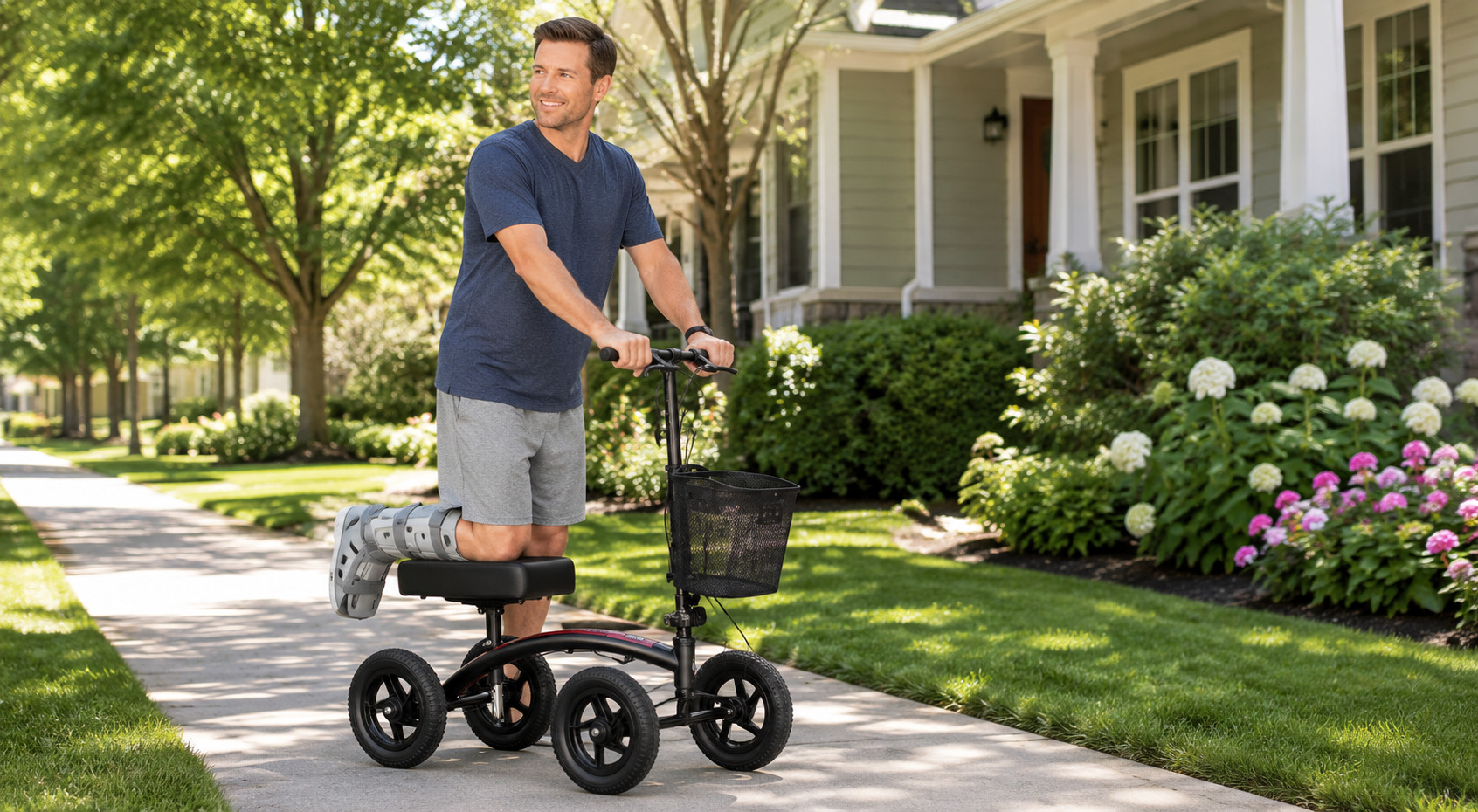
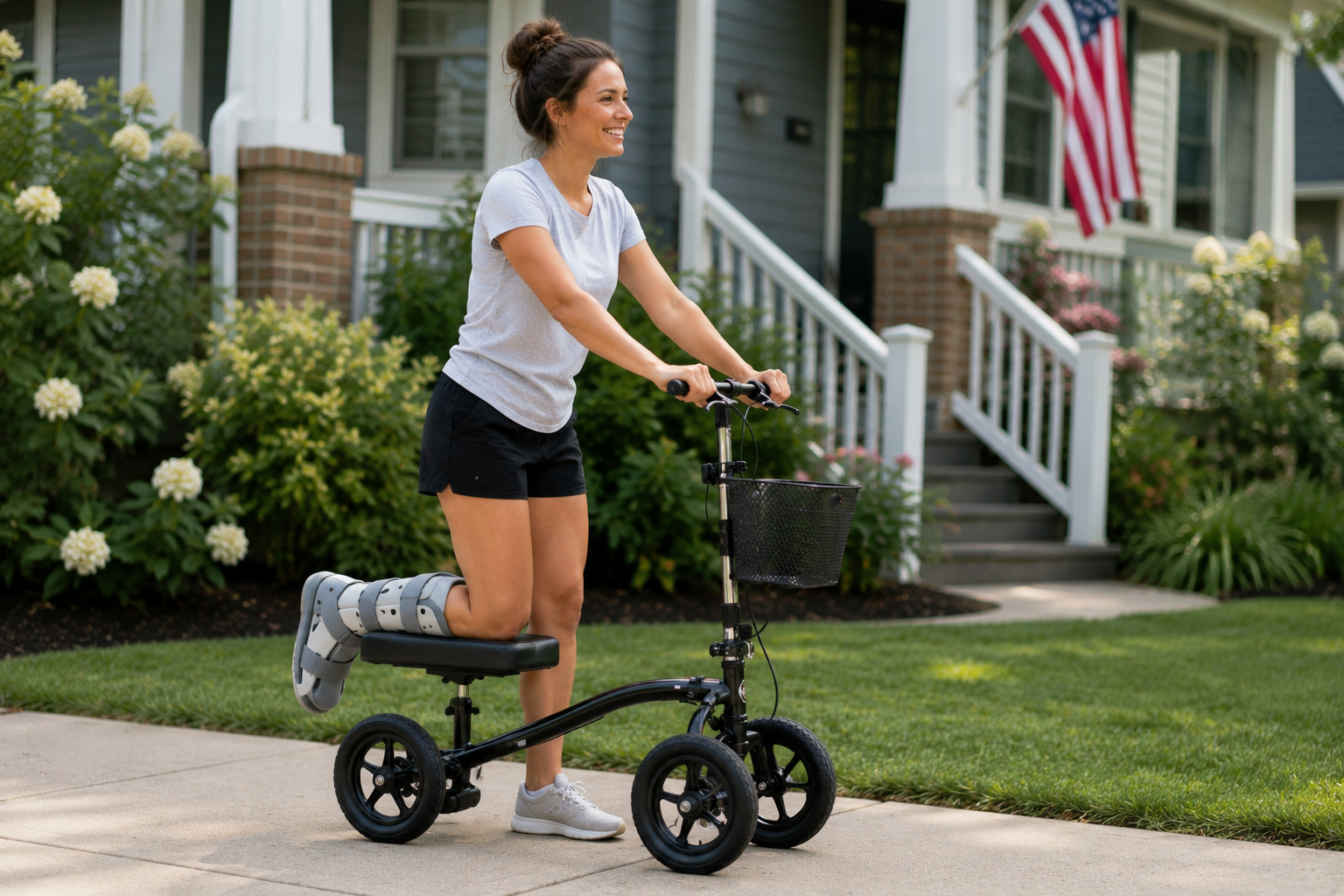
- A knee scooter overcomes these challenges and helps with faster healing because your injured leg rests, bent, on a padded platform, and your healthy leg does the pushing. No weight ever reaches the injured foot or your arms. Additionally, it is easier for you to move around independently.
The “worth it” question isn’t really about the device. It’s about what you’re comparing it to. Against crutches, a knee scooter wins on comfort and speed almost every time. Against a wheelchair, it wins on independence. Against doing nothing and hopping around, it wins on safety.
4 Reasons to Choose a Knee Scooter
If you or someone close to you has a foot or ankle injury, you need to know how a knee scooter can make daily life easier.
Your hands stay free
This sounds minor until you’re trying to open a door or carry a coffee mug while balancing on crutches. A knee scooter has a basket. So, your hands remain free.
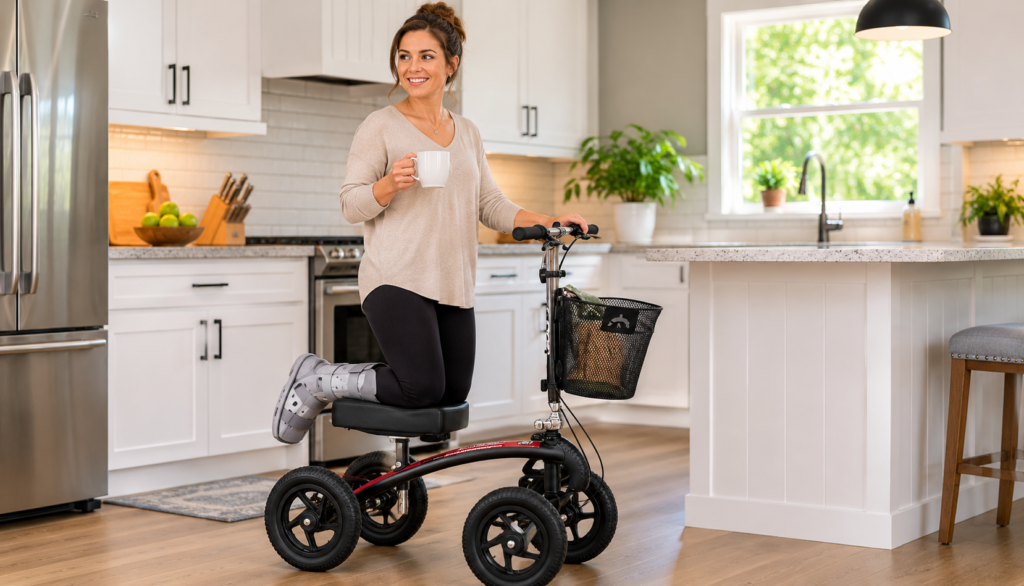
No upper-body fatigue
Crutches turn a trip to the mailbox into a workout. By week two, that adds up to genuinely sore shoulders and wrists on top of the injury you’re already dealing with. A knee scooter uses your strongest, least-injured limb instead.
You move at a normal pace
Hopping or crutch-swinging is slow and exhausting. Rolling on a scooter is closer to walking speed, which matters more than people expect when the recovery stretches past a week or two.
Better posture, less back strain
Crutches pull your shoulders forward and twist your gait. A knee scooter keeps you upright, which means less compensating pain in your back and good leg by the end of recovery.
Is It Worth It Compared To Crutches? The Honest Comparison
Doctors hand out crutches by default, not because they’re better, but because they’re cheap to keep on hand. Once people actually try both, the comparison usually isn’t close
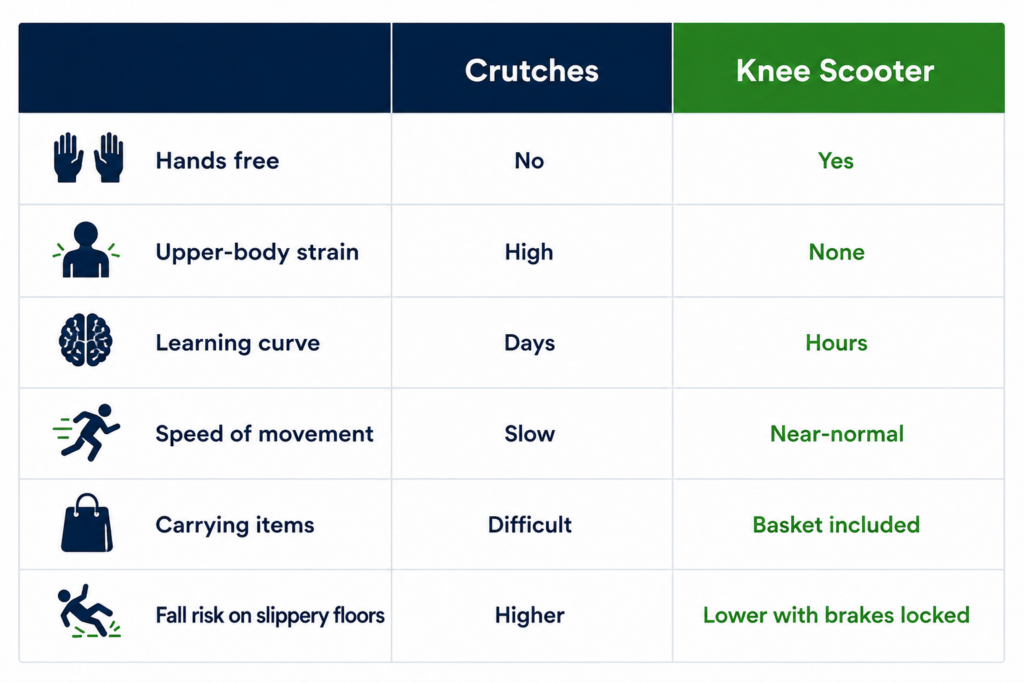
The one place crutches still win: stairs and very tight spaces, where a scooter has nowhere to maneuver. For everything else, the knee scooter does more of the daily-life work with less physical cost.
Is It Worth It Compared To Buying One Outright?
This is where the real financial math lives, and it’s the part most people skip until they’re already three days into a slow Amazon delivery.
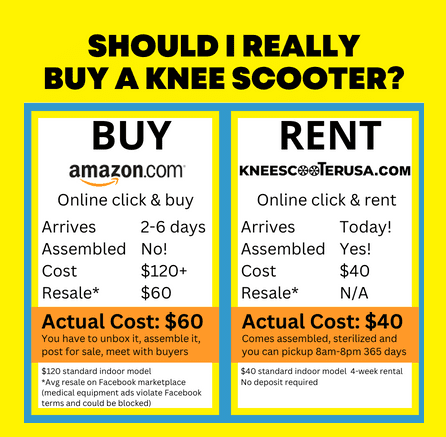
A new knee scooter typically runs somewhere in the $130–$180 range online. That price looks reasonable until the rest of the picture shows up:
- Shipping takes 2-3 days. That’s 2-3 days of managing on crutches or hopping around immediately after an injury or surgery, which is exactly when you’re least equipped to do either.
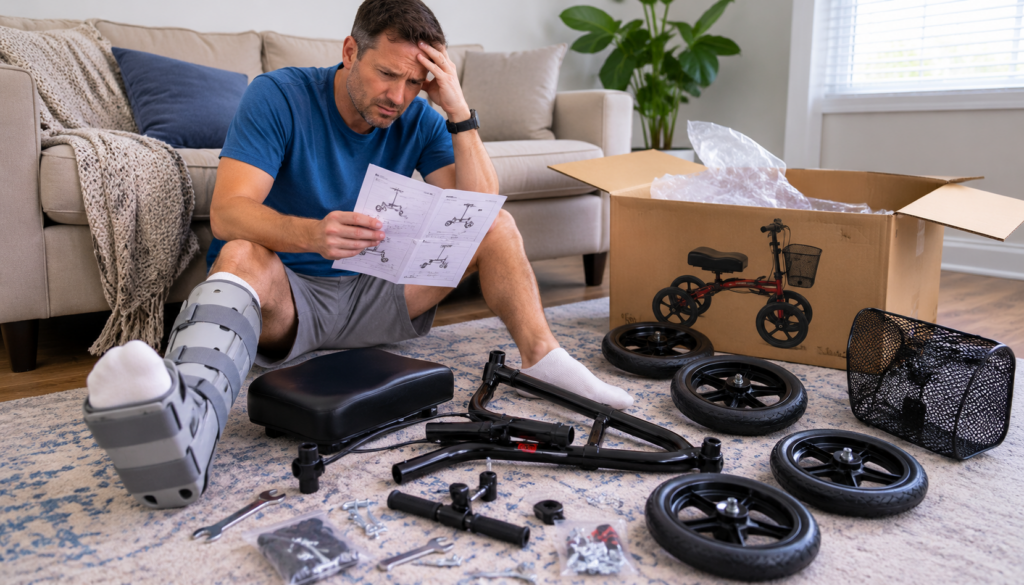
- It arrives unassembled. Putting together a mobility device while non-weight-bearing and in pain is not a fun afternoon.
- Most people only need it for 3–4 weeks. A device is bought for a month of use, then it sits in a closet.
- Reselling it loses most of the value. Resale prices on used scooters typically come in under half the original purchase price, and that’s before factoring in the fact that platforms like Facebook Marketplace now block medical equipment listings entirely, cutting off the easiest resale channel.
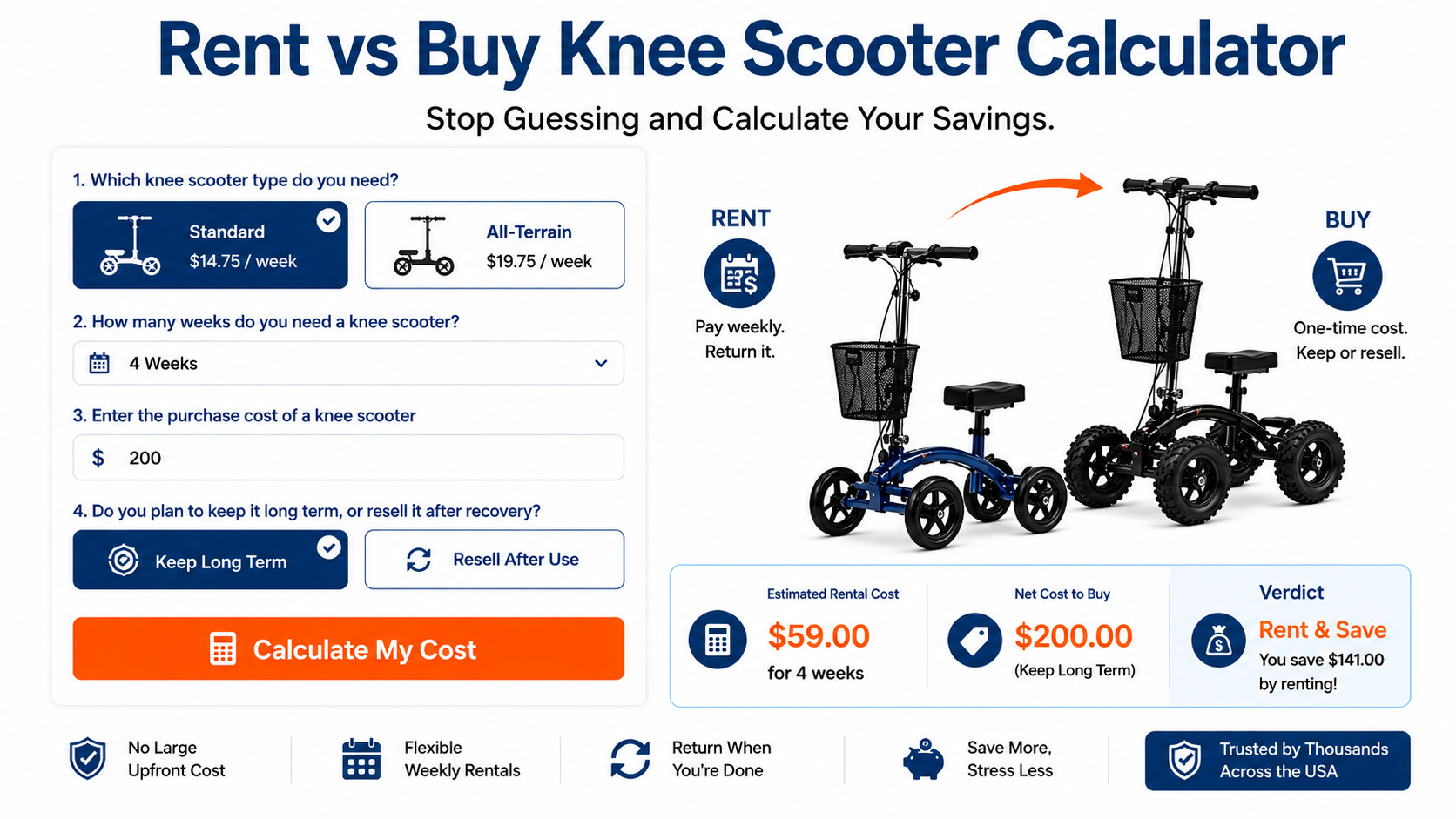
Run the math on total cost, not sticker price. A $150 purchase that resells for $60 after recovery costs $90 net, plus the shipping delay and assembly hassle. A rental at roughly $15/week for four weeks costs $60, with the scooter ready the same day and no setup required.
For anyone using one for a single recovery, renting wins on price almost every time. Buying only makes sense for repeat injuries, ongoing mobility needs, or a household that’s likely to need a second scooter down the line.
Who Should Skip The Knee Scooter Entirely
A knee scooter isn’t the right call for everyone, and worth-it math should include knowing when to walk away from it.
- Knee injuries or arthritis that make kneeling painful. A seated knee scooter is the better fit here, or a walker if balance is also a concern.
- Bilateral leg injuries, where neither leg can bear weight or push. A wheelchair is the safer option.
- Significant balance issues or weak grip strength, since braking relies on hand control similar to a bicycle.
- Homes with no flat path between rooms, where stairs dominate daily movement.
If any of those describe the situation, it’s worth a quick conversation with a doctor or physical therapist before committing to a knee scooter, rented or bought.
Your Next Steps for a Smarter Recovery
For the majority of ankle fractures, foot fractures, ankle sprains, and post-surgery recoveries, yes. The combination of zero strain on the upper body, near-normal walking speed, and free hands solves day-to-day problems better than crutches do, and it solves them for a fraction of what buying and reselling a scooter ends up costing.
The exceptions are real, but narrow: injured knees, bilateral injuries, serious balance concerns, and stair-heavy homes. Outside of those, the question usually isn’t whether a knee scooter is worth it. It’s whether to rent or buy one, and for a 3-to-4-week recovery, renting almost always comes out ahead.
Need one today? Knee Scooter USA has Standard and All-Terrain models ready for same-day pickup, 8 am–8 pm, 365 days a year, with no due dates and insurance-ready receipts when you’re done.