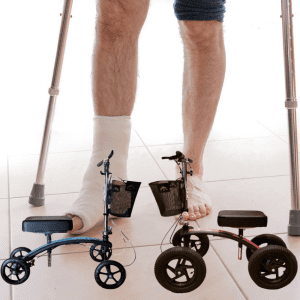
A lot of people assume recovery is mostly about healing. Then they spend a few days trying to move around the house and discover that’s only part of the story. Every day, things suddenly take longer than they should.
That’s where alternatives to crutches start getting attention, especially among patients who want a mobility option that fits more naturally into daily life.
Crutches Alternatives for Staying Mobile During Recovery: Every Option Worth Knowing
Most people walk out of the doctor’s office with a non-weight-bearing order and assume crutches are the only option. They’re not. Better alternatives exist for ankle fractures, foot surgery, sprains, and most similar injuries, and the right one depends on where the injury sits and what your recovery actually looks like day to day.
Here’s a breakdown of every option worth knowing, starting with what fits most ankle and foot injury patients.
Standard Knee Scooter: Best for Most Ankle and Foot Injury Patients
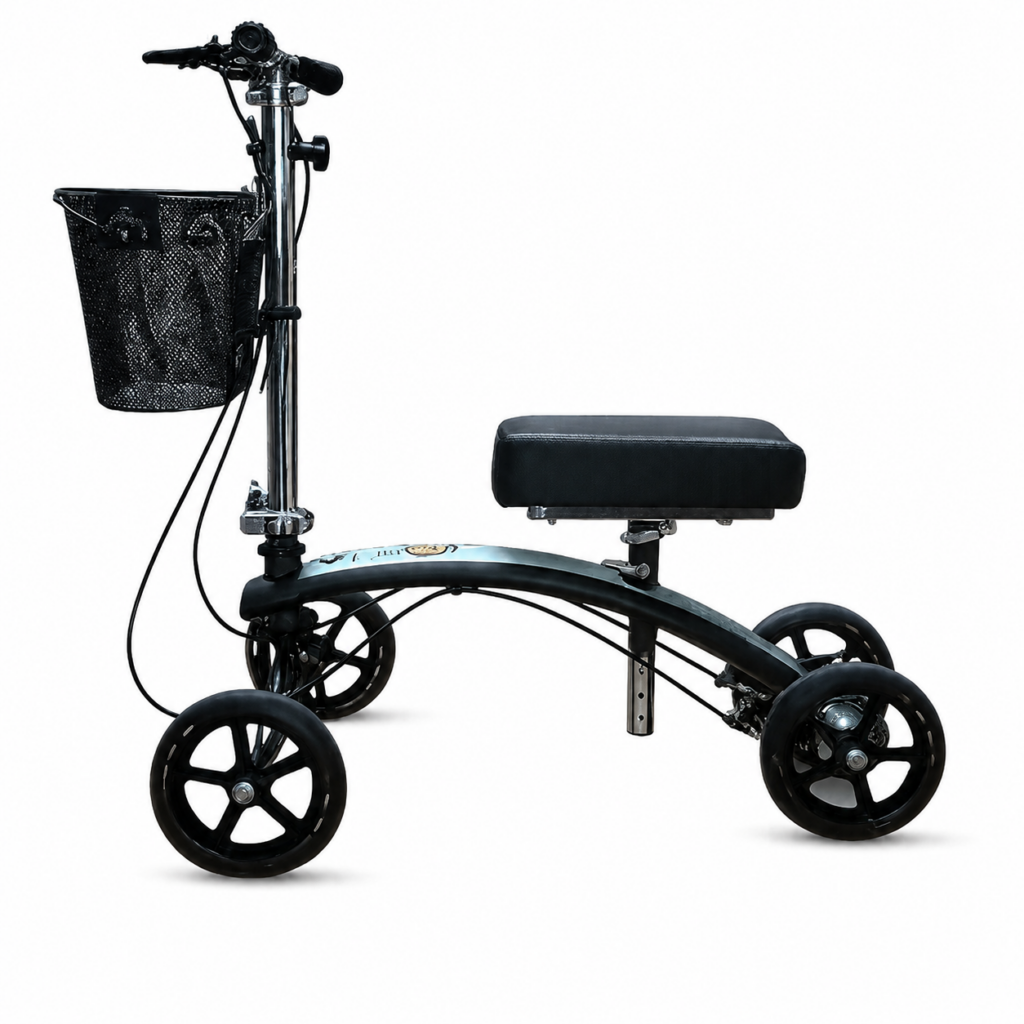
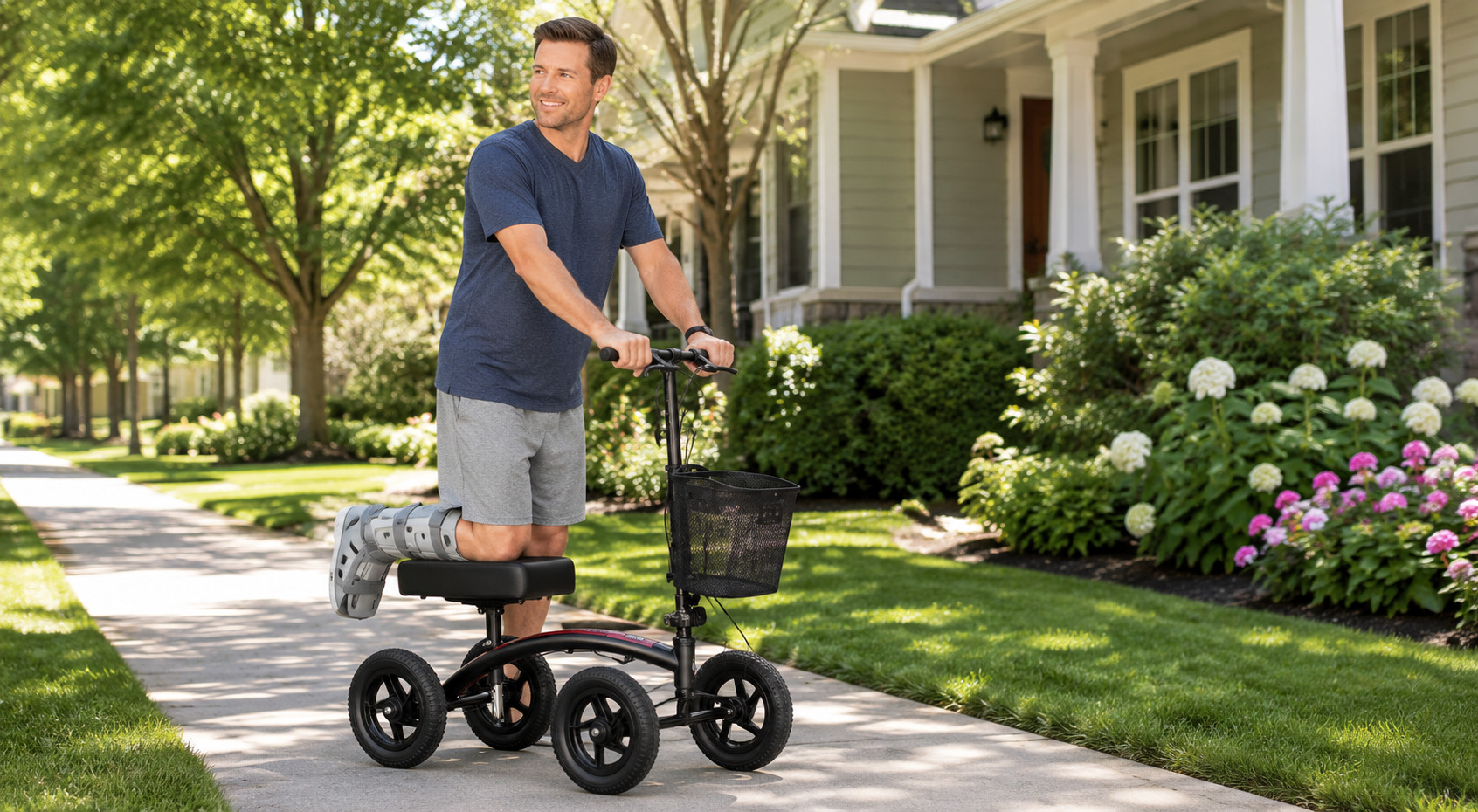
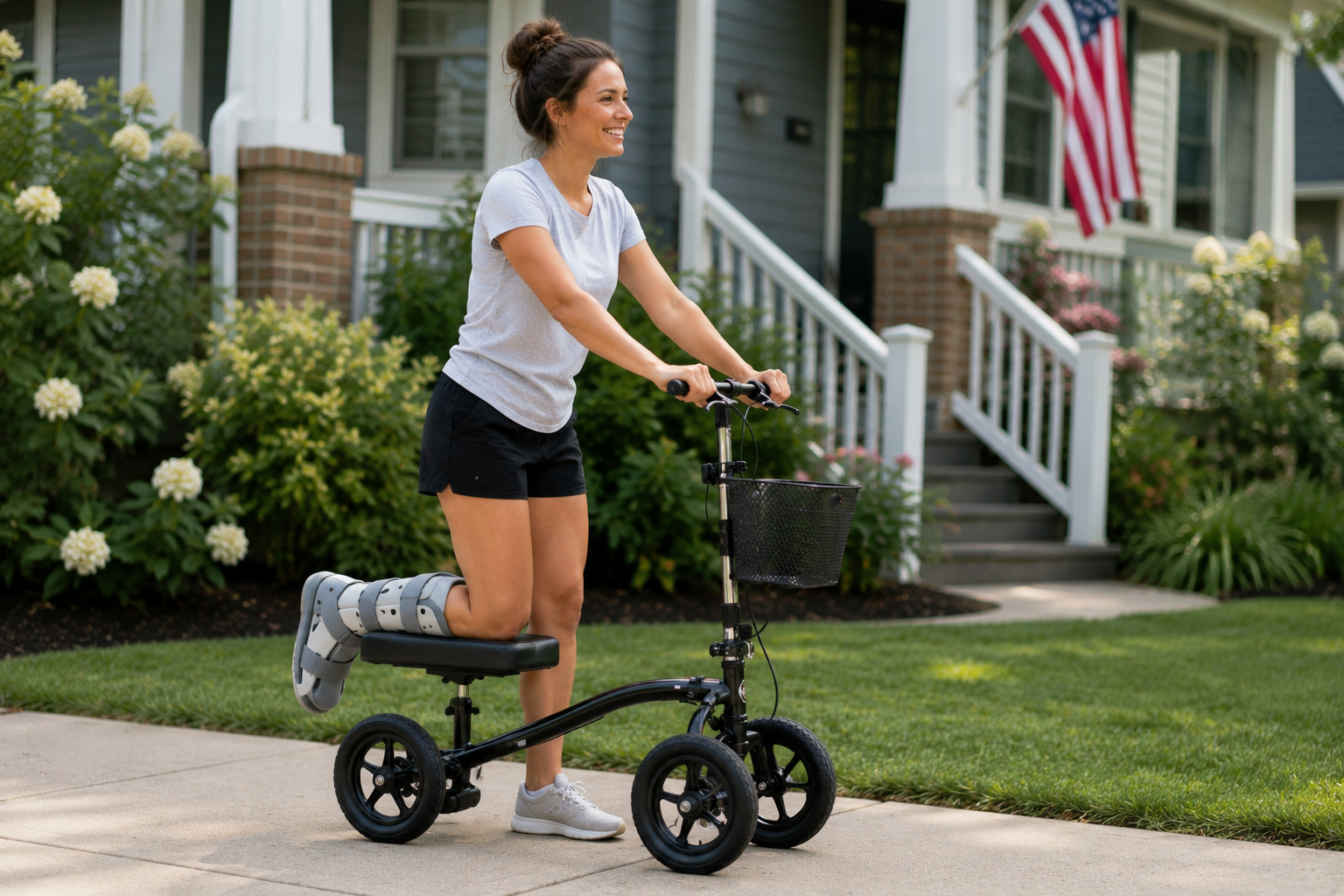
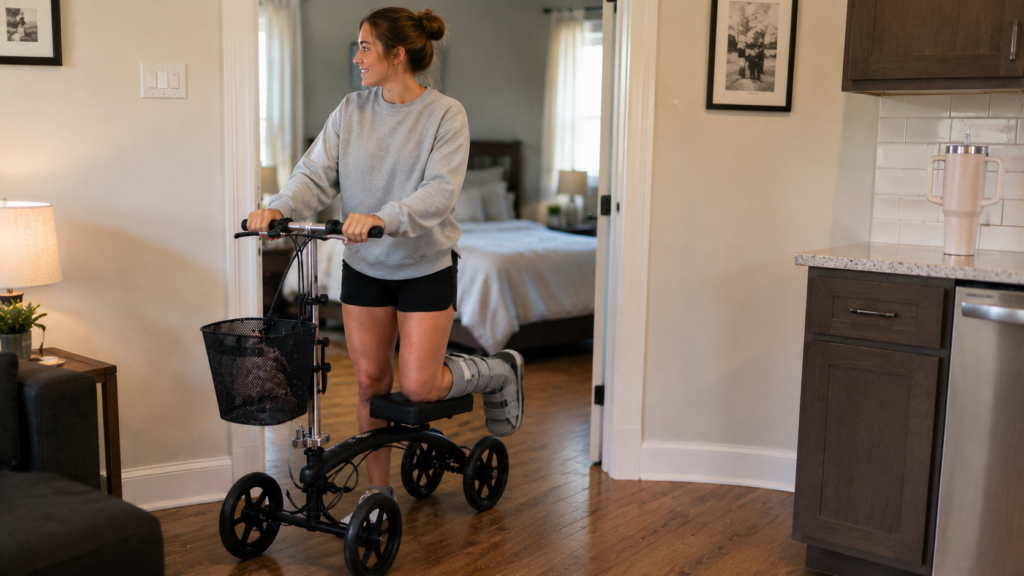
Your injured leg rests on a padded platform at a 90-degree angle. Your good leg pushes you forward. Your foot stays completely off the ground.
Knee scooter also goes by different names like knee walker, roll-about, orthopaedic scooter, but it’s the same device regardless of what the rental place calls it.
Best for:
- Ankle fractures and ankle surgery
- Foot fractures and foot surgery
- Achilles tendon injuries requiring non-weight-bearing recovery
- Ankle sprains where the doctor has ordered zero weight on the foot
- Any below-the-knee injury where the knee joint itself is still healthy
There’s one hard limit here. The platform relies on your knee to carry body weight, so if the knee is the injured joint, this device isn’t the right fit.
Key specs:
- 7″ solid rubber tires
- Fits riders 4’9″ to 6’6″, up to 350 lbs
- Folds down for transport and storage
- Built for carpet, tile, hardwood, and standard sidewalks
- HCPCS codes available for insurance reimbursement
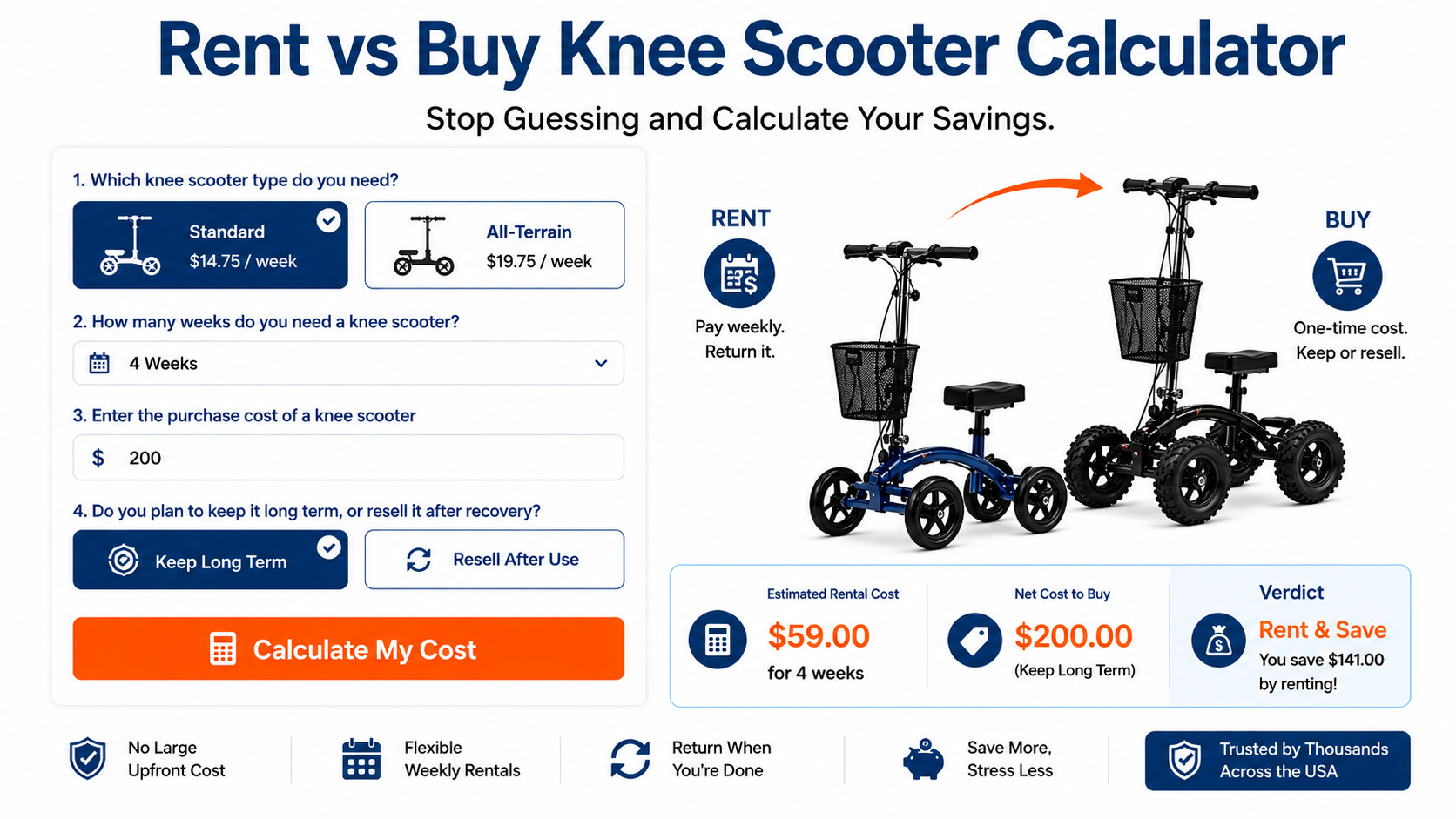
- From $14.75/week with same-day local pickup
Here’s what most patients notice quickly after switching: arms aren’t sore, wrists aren’t sore, and hands are actually free to carry things.
You move at a normal pace instead of hopping. That shift matters more than people expect, and keeping the injured limb fully offloaded while staying upright is exactly what recovery needs.
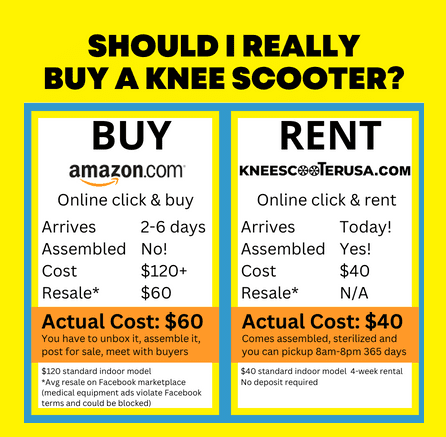
Most patients only use this for 3 to 4 weeks, which changes the math on buying vs. renting completely. A $150 scooter bought online means a 2 to 3-day shipping wait, then assembly on one leg while injured.
When recovery’s over, reselling is harder than it sounds; Facebook’s Commerce Policies flag and remove medical equipment listings, so you typically recover less than half what you paid. Run the actual numbers on renting vs. buying, and local rental at $14.75 a week comes out ahead almost every time.
All-Terrain Knee Scooter: Best for Active and Outdoor Recovery
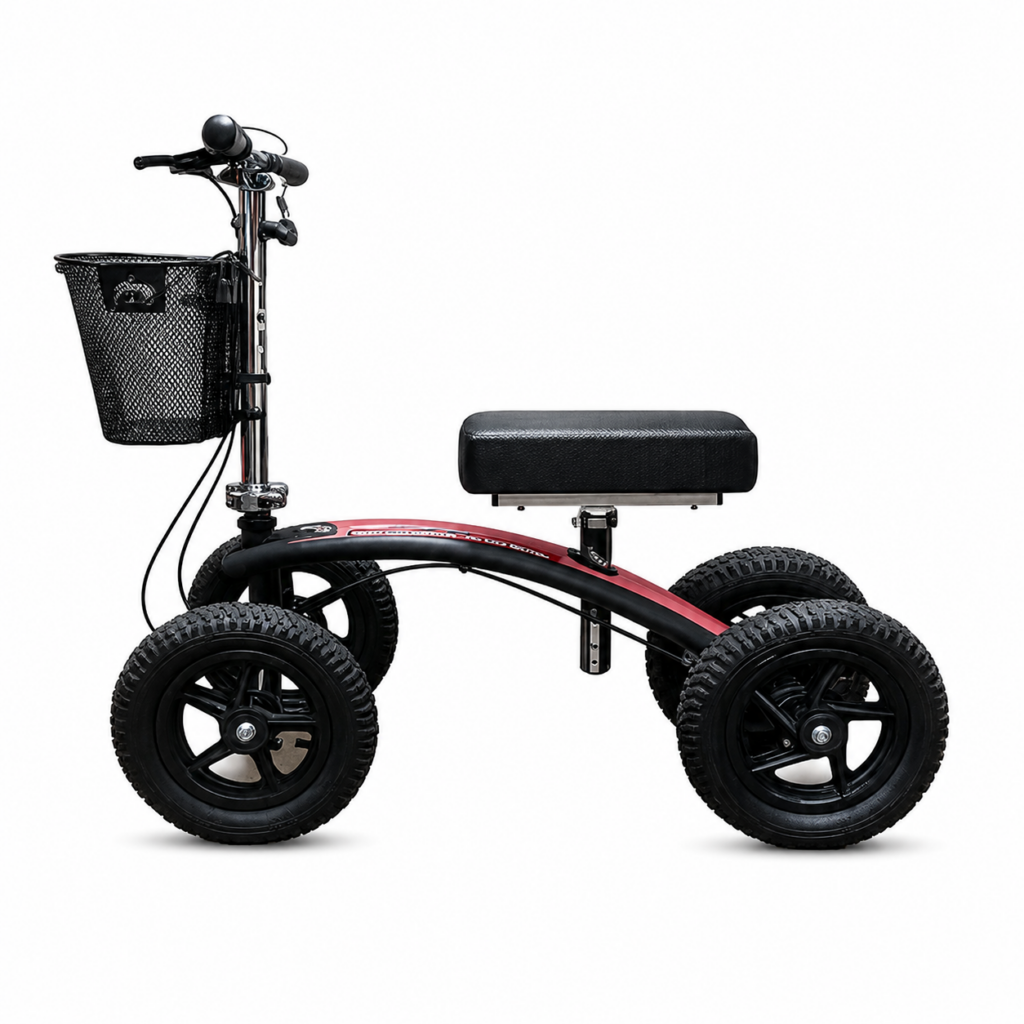
Same platform as the standard model. The difference is 12″ air-filled mountain bike tires in place of solid rubber, and that matters as soon as recovery moves outside.
Best for:
- The same ankle and foot injuries as the standard model
- Anyone who walks the dog daily, hikes, camps, or travels, and isn’t putting life on hold for a broken ankle
- Gravel driveways, packed dirt, uneven paths, and mixed indoor/outdoor environments
- Anyone moving regularly between rough outdoor surfaces and flat indoor spaces
Same knee health requirement as the standard. Stairs are still out on this model, too.
Key specs:
- 12″ mountain bike tires that handle all surfaces: carpet, tile, gravel, packed dirt
- Fits riders 5’0″ to 6’6″, up to 350 lbs
- HCPCS codes available for insurance reimbursement
- $19.75/week with same-day pickup, 8 AM to 8 PM, 365 days a year
Standard vs. All-Terrain: how to decide
The full comparison between both models goes deeper, but the decision isn’t complicated:
- Recovery mostly indoors, on sidewalks, or for office use, and want something light to transport: go Standard
- Active lifestyle, outdoors regularly, uneven terrain, or travel: All-Terrain is worth the extra few dollars
- Genuinely unsure: Standard is the right default; most patients don’t need the upgrade
Pro tip: Recovering through summer or somewhere with gravel and rough terrain? The bigger tires absorb surface variation far better than solid rubber. Your knee pad takes less of a beating on every rough patch, and that adds up over weeks. Based in California, and need something today? The knee scooter rental Sacramento location carries both models for immediate pickup.
Other Crutches Alternatives Worth Knowing About
Knee scooters cover most ankle and foot injury cases. A few situations fall outside that, and it’s worth knowing what the other options actually do before assuming one device fits every injury.
- Seated knee scooter: Same non-weight-bearing principle as a standard model, but the user sits rather than kneels. Works better for elderly patients, people with knee arthritis, or anyone who finds sustained kneeling painful over several weeks. More stable overall, though bulkier in tight spaces. Choosing for an older patient? This mobility support guide covers what to look for.
- Walker/rollator: The right choice when the knee is the injured joint, or when balance is a serious concern alongside the injury. Won’t fully offload a foot or ankle injury the way a wheeled platform does, so don’t treat it as a straight swap for those injury types.
- Wheelchair: For bilateral injuries, upper-leg injuries, or anyone who can’t put weight on either leg. Most stable option on this list by a wide margin. The tradeoff is independence; it’s the most limiting device here in terms of what you can do on your own.
- Walking boot (CAM boot): A partial weight-bearing device; the patient walks on it. That’s fundamentally different from the non-weight-bearing options above. Works for mild ankle sprains or as a late-stage transition once the doctor has cleared limited walking. Not a substitute during the active phase of recovery.
Your orthopedist makes the final call. Injury location, home environment, and recovery timeline all shape which of these actually fits.
Ankle and Foot Injury Recovery Timeline: A Week-by-Week Breakdown
Two questions come up almost every time. How long will this take? And when does weight go back on the foot? The answer depends entirely on the injury.
But for ankle fractures, foot surgery, and severe ankle sprains, the recovery follows a predictable shape. Here’s what the first eight weeks look like.
Weeks 1 to 2: Full Non-Weight-Bearing, Focus on Rest
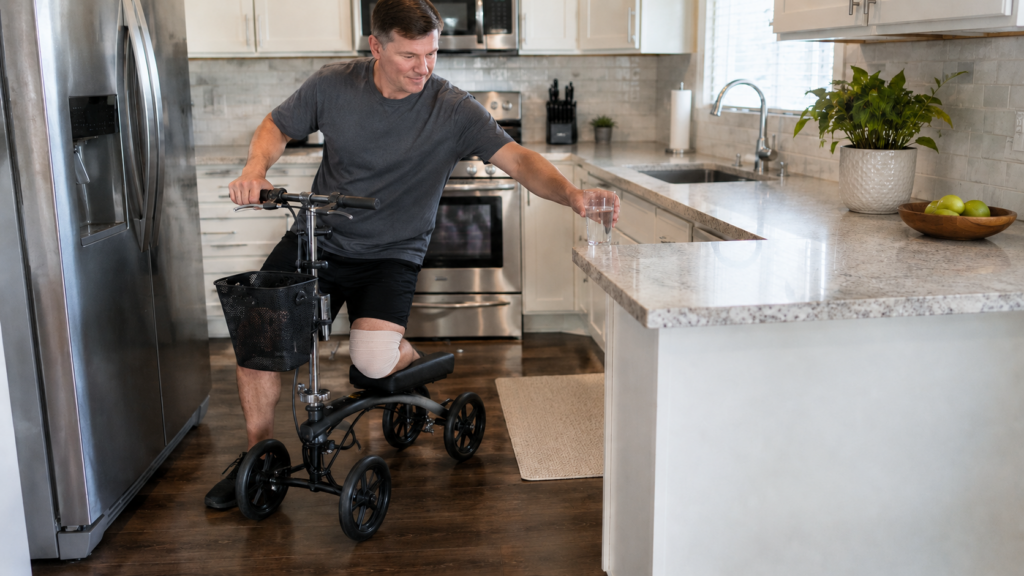
The hardest stretch. Pain and swelling peak here, and the foot needs to stay completely off the ground. No exceptions. Any weight on it, even briefly, risks shifting the healing bone and adding weeks to the timeline.
The knee scooter handles everything in this phase: kitchen, bathroom, bedroom, and out to the car. Every single trip.
A few things that genuinely matter right now:
- Elevate the foot whenever sitting or resting. Swelling slows healing more than most people expect, and keeping it above heart level drains it faster than anything else
- The scooter handles all movement; testing weight-bearing “just to see how it feels” is how week two turns into week four
- The 48 hours right after injury or surgery set the tone; overdoing it early pushes the whole timeline back
These two weeks aren’t comfortable. Get them right anyway. The rest of recovery depends on it.
Weeks 3 to 4: Still Offloading, But the Worst Is Behind You
Swelling starts to ease. Pain becomes less constant. For most ankle fracture and foot surgery patients, weeks three and four are still fully non-weight-bearing. But it stops feeling like a crisis.
The scooter is just how you get around now. Not a medical device anymore, just the thing that moves you from room to room.
What this phase usually looks like day to day:
- Pain and swelling keep reducing, but don’t expect them to disappear; that happens later
- A follow-up appointment usually lands in this window; X-rays confirm whether healing is tracking right
- The scooter covers everything: short errands, kitchen runs, working from home, getting to appointments
Grade 3 ankle sprains follow a similar non-weight-bearing path in this window. Grade 1 and Grade 2 sprains are a different situation; shorter timelines, weight-bearing starts far earlier.
Don’t apply a sprain timeline to a fracture. Bone heals more slowly than soft tissue. That difference matters.
Weeks 5 to 8: The Transition Phase
This is where the shift toward partial weight-bearing begins for most ankle fracture and foot surgery patients. Usually into a walking boot first. Not straight back into regular shoes.
The scooter doesn’t disappear immediately; a lot of patients use both during this period: the boot for short trips and the scooter when the leg gets tired, or distances get longer.
Three things typically signal it’s time to transition:
- Doctor clearance at a scheduled follow-up, not a personal judgment call
- X-ray confirmation that the fracture site has healed enough to take load
- Pain levels that allow controlled weight-bearing without sharp or worsening discomfort
Don’t rush it. Loading the bone before it’s ready doesn’t speed anything up. It just extends the timeline, sometimes by weeks. Age, bone density, and how well the offloading was maintained in the early weeks all affect where someone lands in this window.
Your orthopedist decides when to make the move. This breakdown just tells you what’s coming.
Choose Freedom Of Movement While You Heal
The reality is that most people start looking at mobility aids only after they’re told they can’t put weight on a foot for several weeks. That’s when the differences become obvious. Some options are better for balance. Some are better for specific injuries.
For many ankle fractures, foot surgeries, and severe sprains, though, a knee scooter often ends up being the option that people stick with because it makes everyday tasks feel less like a chore. Recovery is hard enough already. Getting from the bedroom to the kitchen shouldn’t be.
Need one quickly? Knee Scooter USA offers affordable rentals without the wait, assembly, or hassle of trying to sell equipment after recovery.