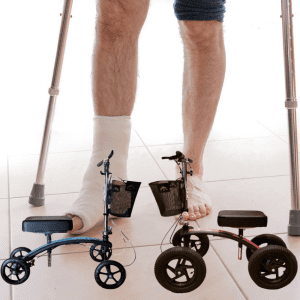
Picking the right mobility aid is the easy part after a fracture, sprain, or surgery. Figuring out whether your insurance will pick up the tab is where most people get stuck.
So, are you wondering if knee scooters are covered by insurance? Usually, yes, at least partially, but it depends on your plan, your diagnosis, and whether you have the right paperwork before you buy or rent.
Is a Knee Scooter Covered by Insurance? What Do You Need to Know First?
People phrase this question a dozen different ways: will insurance cover a knee scooter, does insurance cover a knee scooter, will insurance cover knee scooter, will insurance pay for a knee scooter, is knee scooter covered by insurance. They’re all asking the same thing, and the short answer is the same: Usually, if you have the right paperwork.
Coverage almost always comes down to one classification: durable medical equipment (DME). Insurers treat this kind of equipment the same way they treat wheelchairs, walkers, and crutches: items meant to help you recover safely at home. If your plan covers DME (most do, in some form), coverage usually applies, as long as a doctor has documented that you need it.
That’s the short version. The details, which insurer, which diagnosis, which paperwork, are where things either come through quickly or get stuck for weeks.
And if you’re still deciding whether this is even the right equipment for your recovery, our pros and cons breakdown is worth a read first.
Does Insurance Cover Knee Scooters as Durable Medical Equipment?
For most private insurers, this equipment falls under HCPCS code E0118: the billing code that tells your provider “this is a DME rental or purchase, not a discretionary item.”
To get it approved under that code, three things generally need to line up:
- A qualifying diagnosis: a fracture, sprain, post-surgical recovery, or another condition that makes weight-bearing on one foot unsafe.
- Medical necessity: your doctor has to state, in writing, that this device, not just crutches, is appropriate for your recovery.
- A prescription or written order: most insurers won’t reimburse without one, even if the rest of your claim is solid.
Miss any one of those, and even a plan that technically covers DME can deny the claim.

Knee Scooter Insurance Coverage by Payer
Coverage rules aren’t universal, they shift depending on who’s paying. Here’s how the major categories usually break down:
Medicare
Medicare Part B typically covers 80% of the approved cost for DME once you’ve met your deductible, provided a Medicare-enrolled doctor documents medical necessity and the equipment comes from a Medicare-approved supplier.
You’re responsible for the remaining 20% unless you have supplemental coverage.
Medicaid
Medicaid coverage depends on your state’s specific DME policy, since Medicaid is administered at the state level. Most states follow the same medical-necessity standard as Medicare, but prior authorization requirements and approved supplier lists vary, so it’s worth calling your state Medicaid office directly before you commit to a purchase.
Private insurance, HSA, and FSA
Private plans generally follow the same DME logic as Medicare, though copays, deductibles, and in-network supplier rules differ by carrier, see how that plays out with a major insurer in our Blue Cross Blue Shield coverage guide.
If your plan doesn’t cover the full cost, or you’d rather skip the paperwork, renting is typically an eligible expense under a Health Savings Account (HSA) or Flexible Spending Account (FSA), since it’s a doctor-recommended medical device.
How to Get a Knee Scooter Through Insurance
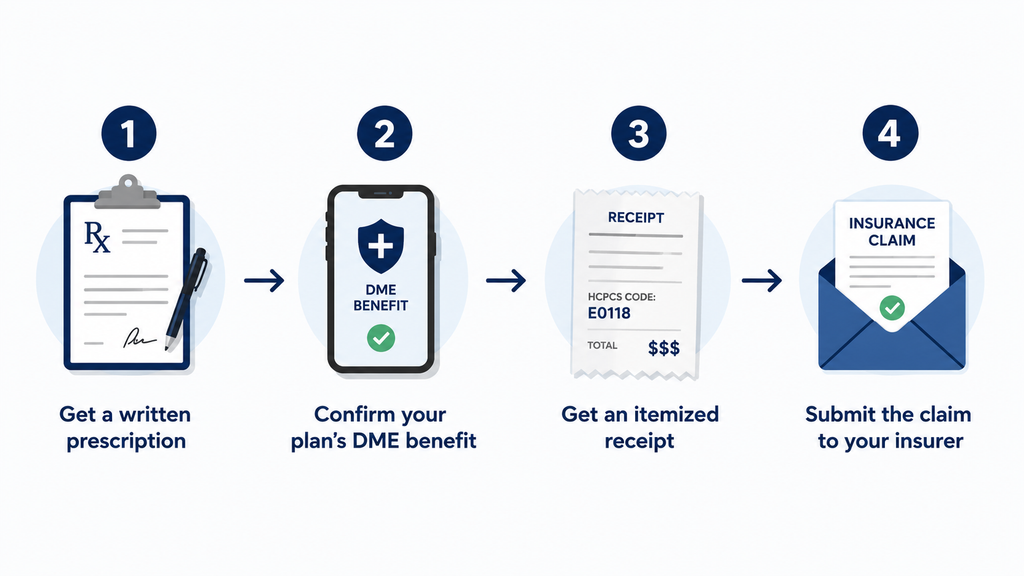
If you’d rather go the reimbursement route than pay out of pocket, the process usually looks like this:
- Get a written prescription from your doctor specifying a knee scooter or knee walker, along with your diagnosis. Here’s exactly where to get a knee scooter with a prescription if you don’t have one yet.
- Confirm your plan’s DME benefit by calling the number on your insurance card and asking specifically about HCPCS code E0118.
- Get an itemized receipt with the HCPCS code included, whether you buy or rent.
- Submit the claim to your insurer, along with the prescription and receipt.
What to Do If Your Claim Gets Denied
A denial isn’t always final. Insurers reject DME claims for missing paperwork, an unclear diagnosis code, or an out-of-network supplier far more often than they reject them for actual ineligibility.
Before you assume you’re on the hook for the full cost:
- Ask your insurer for the specific denial reason in writing.
- Confirm your prescription includes the exact diagnosis and a statement of medical necessity.
- Check whether your supplier was in-network, this is a common, fixable cause of denial.
- File an appeal. Most insurers, including Medicare, allow at least one round of appeal with additional documentation.
The Faster Way to Get Moving While You Sort Out Insurance
Here’s the part insurance paperwork doesn’t solve: you usually need to get moving the same day you’re injured, not two to three weeks later once a claim clears.
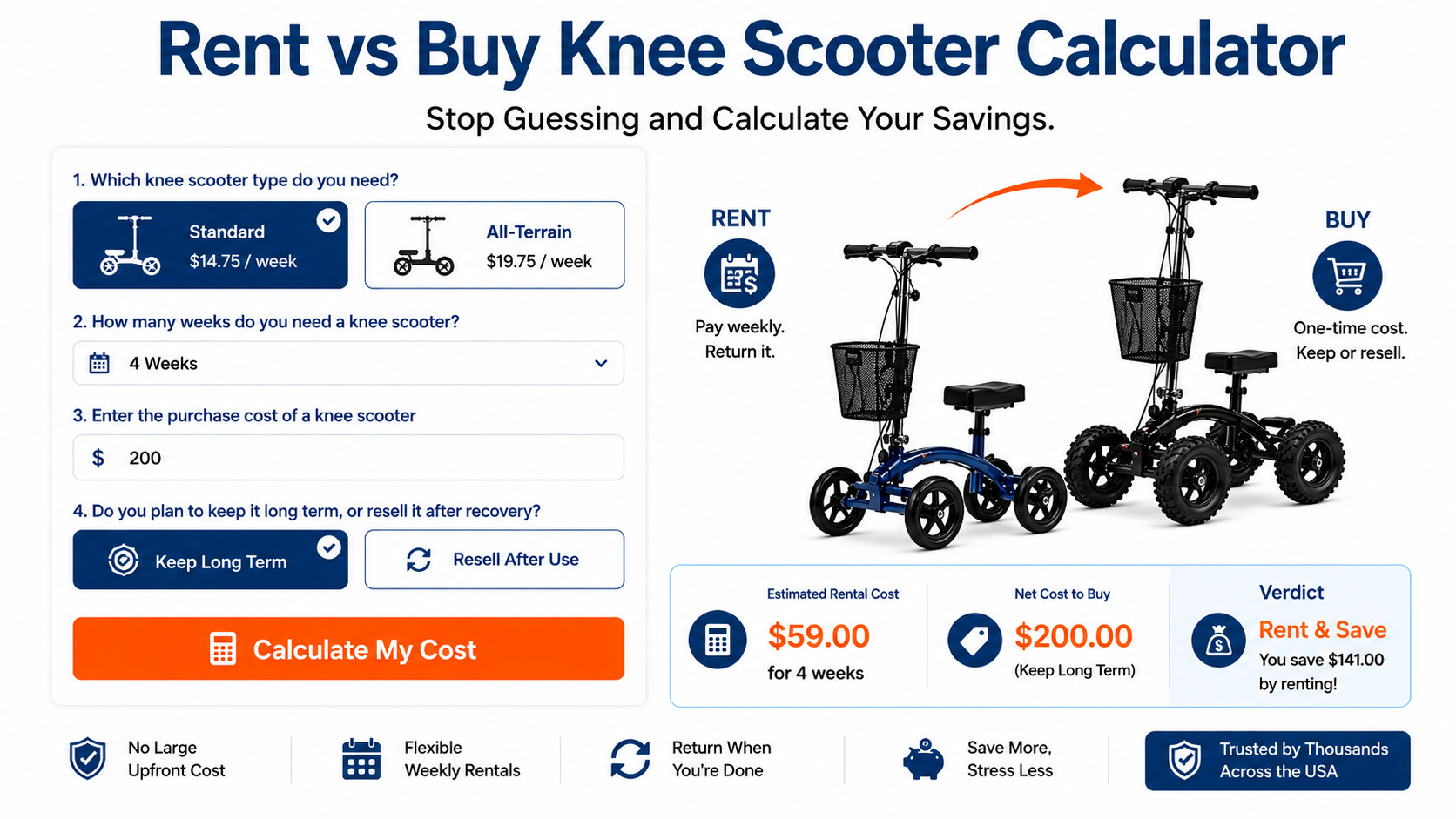
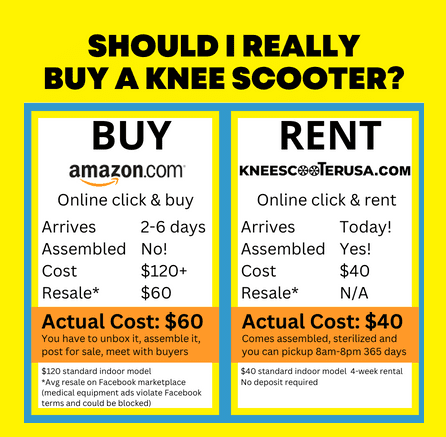
That’s the gap Knee Scooter USA is built around. Instead of waiting on Amazon shipping and assembling equipment one-handed, you can rent locally, walk out the door in about five minutes, and deal with reimbursement afterward, not before. Here’s what to look for in a knee scooter before you rent.
Every rental comes with a detailed receipt, HCPCS code included, so you can still submit it to your insurer for reimbursement. There’s no deposit, no long-term commitment (rentals renew weekly with no due date), and locations are open 8 am-8 pm, 365 days a year.
FAQs
Are knee scooters covered by Medicaid?
In most states, yes, Medicaid typically covers this equipment under the same DME and medical-necessity rules as Medicare, though prior authorization requirements and approved suppliers vary by state.
Check with your state Medicaid office to confirm your plan’s specific rules.
What conditions qualify for knee scooter insurance coverage?
Insurers generally approve claims for a fractured foot or ankle, a sprain, post-surgical recovery, or any diagnosis where a doctor determines that non-weight-bearing mobility is medically necessary. The diagnosis has to be documented on your prescription, not just mentioned verbally.
Do I need a prescription for knee scooter insurance coverage?
Yes. Almost every insurer, including Medicare and Medicaid, requires a written prescription or order from your doctor before they’ll reimburse this equipment as durable medical equipment.
Where can I get a knee scooter through insurance?
You can purchase or rent from any Medicare-approved or in-network DME supplier and submit the receipt for reimbursement. If speed matters more than paperwork, renting locally — same-day, no prescription required upfront — and filing for reimbursement afterward is usually faster.
Is a knee scooter always considered DME?
Almost always, yes, provided it’s prescribed for a medical reason. The exception is if you buy or rent one without any doctor’s order — in that case, insurers typically classify it as an out-of-pocket convenience item, and it won’t qualify for reimbursement.
How can I check if my insurance covers a knee scooter?
Call the member services number on your insurance card and ask specifically whether your plan covers durable medical equipment under HCPCS code E0118, and whether you need prior authorization or an in-network supplier.
Why was my knee scooter not covered by insurance?
The most common reasons are a missing or incomplete prescription, an out-of-network supplier, or a diagnosis code that doesn’t clearly support medical necessity. Most of these are fixable with an appeal and the right documentation.