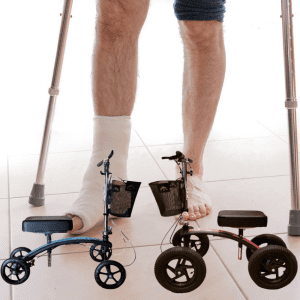
After a visit to the orthopedic office, you’re left figuring out how to get through daily life with a boot on your foot. A knee scooter is usually the easiest answer. The harder question is who’s paying for it.
If you’re on a Blue Cross Blue Shield plan, the honest answer is “it depends.” But it’s not a guessing game. There’s a real process behind it, and once you know the steps, getting a clear answer takes just a phone call.
Here’s what coverage actually looks like, what BCBS needs from you, and where renting locally makes more sense than buying and waiting for insurance to sort itself out.
Blue Cross Blue Shield Knee Scooter Coverage Rules
Having a Blue Cross Blue Shield (BCBS) card doesn’t automatically mean your device is paid for. In the insurance world, coverage for knee scooters falls under Durable Medical Equipment (DME).
While BCBS plans generally cover DME, navigating their system comes down to two critical factors:
The “Medical Necessity” Rule
BCBS will only chip in if a doctor certifies that the scooter is a physical necessity for your recovery, rather than just a convenience. You will almost always need a formal written prescription stating that you are strictly non-weight-bearing.
.The 34-Company Network
BCBS isn’t one giant insurance company. It is a federation of 34 independent, locally operated companies. Because each local branch sets its own rules, coverage details vary wildly:
- State-by-State Rules: A scooter claim that gets approved instantly by BCBS of Illinois might require strict prior authorization from BCBS of Texas.
- Plan Variations: Your specific deductible, copay, and whether they prefer renting over buying depend entirely on your local plan network, not the logo on your card.
⚠️ Before You Order: Always call the member services number on the back of your card. Ask specifically if your plan covers DME code E0118 (the standard billing code for a crutch alternative/wheeled walker) and whether they require a contracted in-network provider.
Quick Checklist to Secure Coverage
Get a Doctor’s Prescription: Prerequisite.
Ensure your doctor explicitly prescribes a “knee scooter” or “wheeled walker” and notes that you are strictly non-weight-bearing.
2. Verify Your DME Benefits: Call BCBS.
Call the number on your card to confirm your deductible status and ask if “DME Code E0118” requires prior authorization.
Request an Insurance-Ready Receipt: At Checkout.
Whether you rent or buy, grab an itemized receipt containing the proper medical billing codes so you can submit it to BCBS for reimbursement.
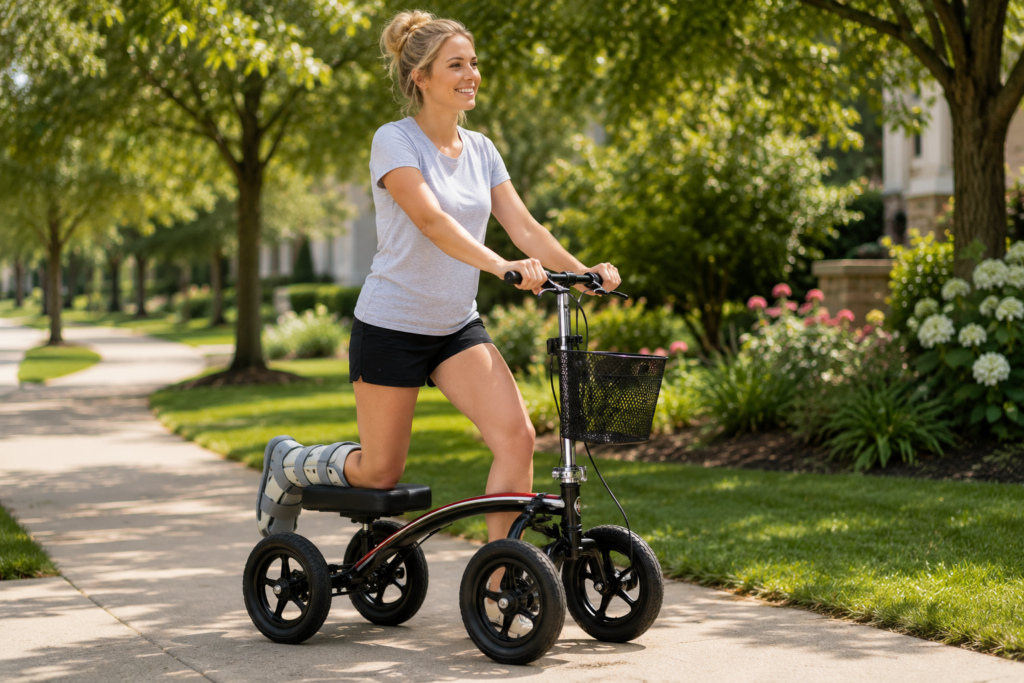
4 Things Determine Whether Your Knee Scooter Gets Covered
Medical necessity
Your doctor needs to document that the scooter is treating a real knee or ankle injury, not just convenient to have around. Ankle fractures, foot surgery, Achilles tendon repairs, and ankle sprains, where you’ve been ordered to stay off the foot entirely, are the textbook cases.
A prescription or letter of medical necessity from the treating physician is the foundation of the whole claim.
DME classification
The scooter has to qualify as equipment for repeated use that serves a therapeutic purpose, not a one-time convenience item. A knee scooter checks that box the same way wheelchairs and walkers do, which is why most BCBS plan documents group them together under the DME benefit.
In-network supplier
Many BCBS plans only pay DME benefits at the preferred rate when the equipment comes from an in-network supplier. Go outside that network, and you may face a smaller insurance reimbursement, or none at all, depending on the plan.
Prior authorization
Some BCBS plans require pre-approval. Your doctor’s office typically handles the paperwork here. They need to submit the records and the prescription before the rental or purchase.
How To Check Your Coverage?
The number on the back of your BCBS card connects you to member services, and DME coverage questions are something they field constantly.
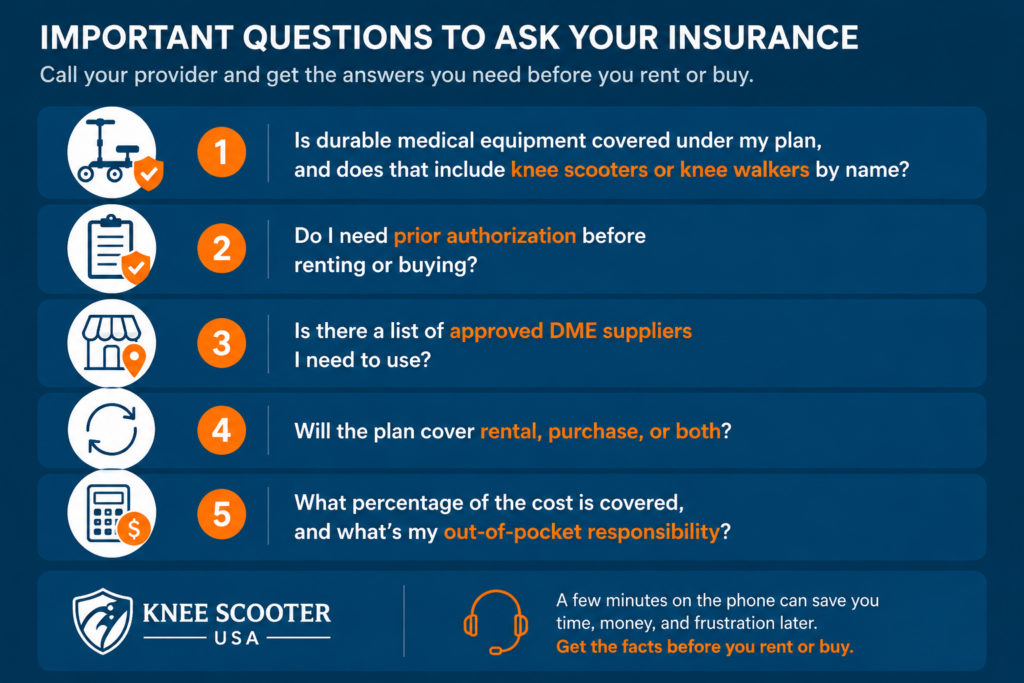
Write down who you spoke with and what they told you. If a claim gets disputed later, having that record matters.
What Your Doctor Needs To Provide?

A knee scooter claim moves faster when the paperwork is right the first time. Your physician’s office typically needs to supply:
- A prescription specifying the knee scooter, sometimes called a knee walker, as the recommended mobility device.
- Diagnosis codes tied to the injury, whether that’s an ankle fracture, foot surgery, or a sprain severe enough to require non-weight-bearing recovery.
- A letter of medical necessity, if the plan requests one, explaining why crutches or a walker aren’t appropriate for this injury.
- Any supporting records from the surgery or ER visit, if the request follows a procedure.
Most orthopedic practices have handled this exact request more times than they can count, so don’t hesitate to ask the front desk for help putting it together.
Rental vs. Purchase: Which One Is BCBS More Likely To Cover?
Because Blue Cross Blue Shield plans evaluate durable medical equipment claims based on the length of your recovery, they treat short-term rentals and outright purchases very differently.
| Feature | Insurance Rental (Preferred Path) | Outright Purchase (Rarely Favored) |
| BCBS Approval Likelihood | High – Insurance companies prefer to pay a low weekly rate for temporary recoveries. | Low – Usually denied for short-term use; typically only approved for permanent or long-term mobility issues. |
| Typical Recovery Timeline | Ideal for standard 3 to 8 week healing windows (e.g., ankle fractures, bunion surgery, Achilles tears). | Built for recoveries extending past 3 to 4 months, or for recurring medical conditions. |
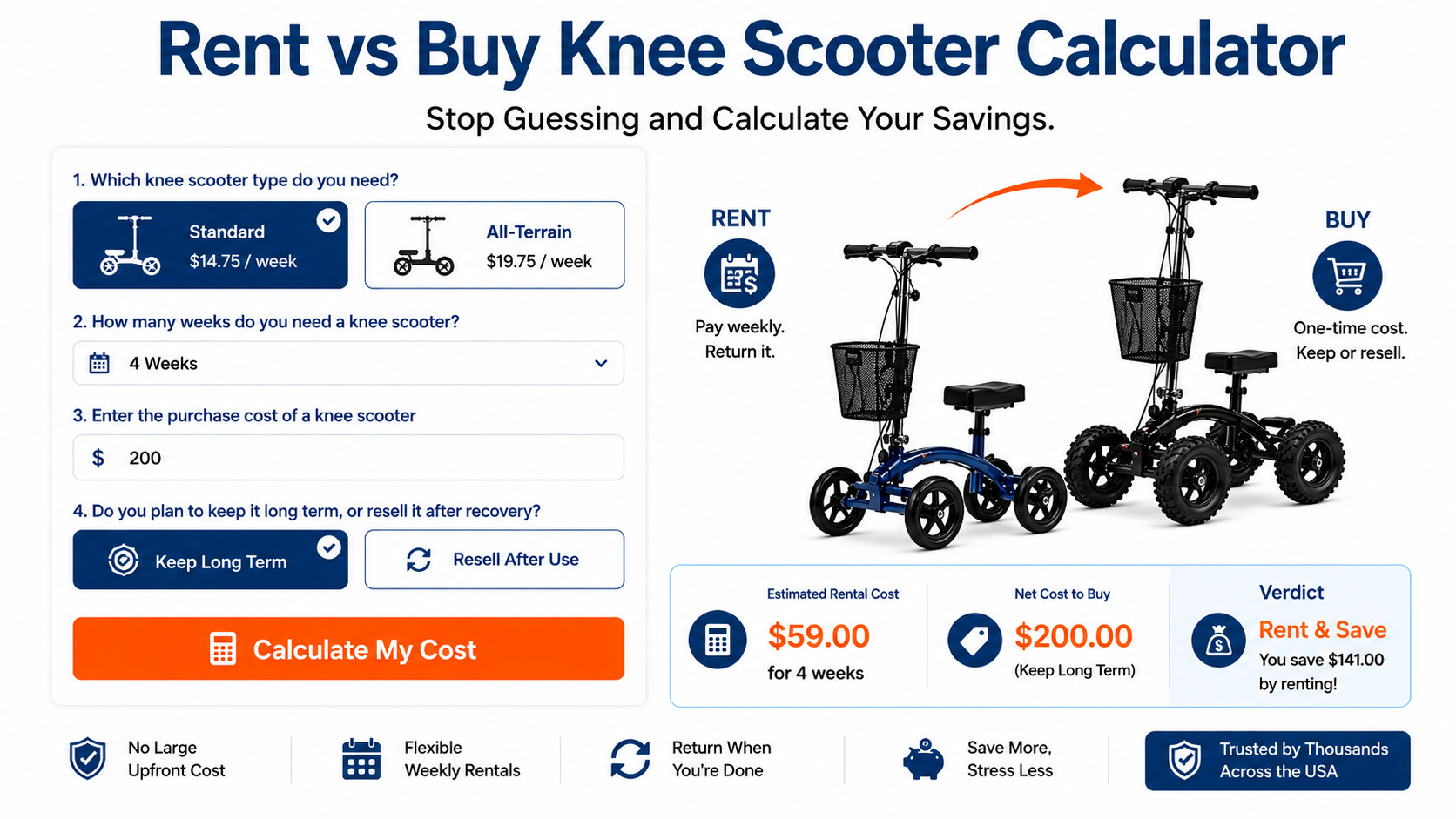
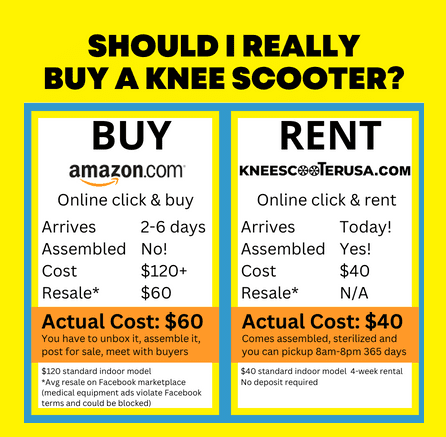
| Out-of-Pocket Risk | Low – If insurance rejects the claim, local out-of-pocket rental rates are highly affordable (typically around $15/week). | High – If insurance rejects the claim, you are stuck with a $130–$180 upfront bill and a device you cannot easily resell. |
| Post-Recovery Hassle | None – You simply return the scooter to the provider when your doctor clears you to bear weight. | High – The scooter sits in your closet, and reselling is difficult since platforms like Facebook Marketplace ban medical listings. |
The Out-of-Pocket Reality: Even if your specific BCBS plan has a high deductible that you haven’t met yet—meaning you’ll pay out of pocket anyway – the cost of renting still protects you from the upfront cost and assembly hassle of buying a device you’ll only use for a month.
What Happens If BCBS Denies The Claim?

Common reasons claims get rejected include missing prior authorization, insufficient documentation of medical necessity, or using an out-of-network supplier when the plan required an in-network one.
If that happens:
- Request the specific denial reason in writing from BCBS.
- Go back to your doctor’s office and ask whether additional documentation can address the gap.
- File a formal appeal through your plan’s member portal or by phone; BCBS plans are required to have an appeals process.
- Ask your DME supplier whether they can help resubmit with corrected codes or paperwork. A supplier that’s handled hundreds of these claims usually knows exactly where the application went wrong.
Persistence matters here. A first denial is common, but a properly resubmitted claim with the right documentation often gets approved on appeal.
Take Control of Your Recovery Timeline Today
Here’s the practical reality nobody mentions in the insurance paperwork: prior authorization, doctor’s office processing, and BCBS review can take days, sometimes longer, and you need a way to get around your house tonight, not after a claim clears.
That’s the gap a local knee scooter rental fills. At Knee Scooter USA, you can pick up a Standard or All-Terrain knee scooter the same day, often within five minutes of booking online, with no due dates and no appointment required.
With us, you don’t need to wait for insurance to rent a knee scooter. When you’re ready to return it, you’ll receive an email receipt with the HCPCS codes BCBS needs for reimbursement, so the insurance conversation happens on your timeline rather than holding up your recovery.