If you’ve searched how to use a knee scooter on stairs, hoping for a workaround, the honest answer isn’t the one most people want. A knee scooter and a staircase don’t mix, and trying to force it usually ends with a fall, not a faster recovery.
There are a few reliable ways to handle stairs while you’re non-weight-bearing, and knowing them before you actually face a staircase makes a real difference.
In this article, you’ll find out why scooters and stairs don’t work together, what to do instead, and how to set up your home so stairs stop being a daily problem.
Why You Can’t Use A Knee Scooter On Stairs
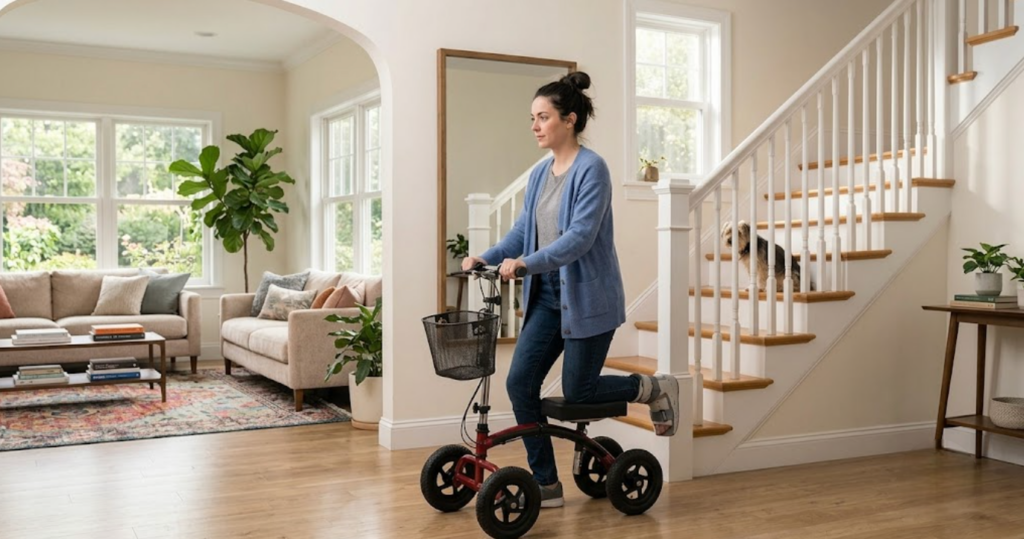
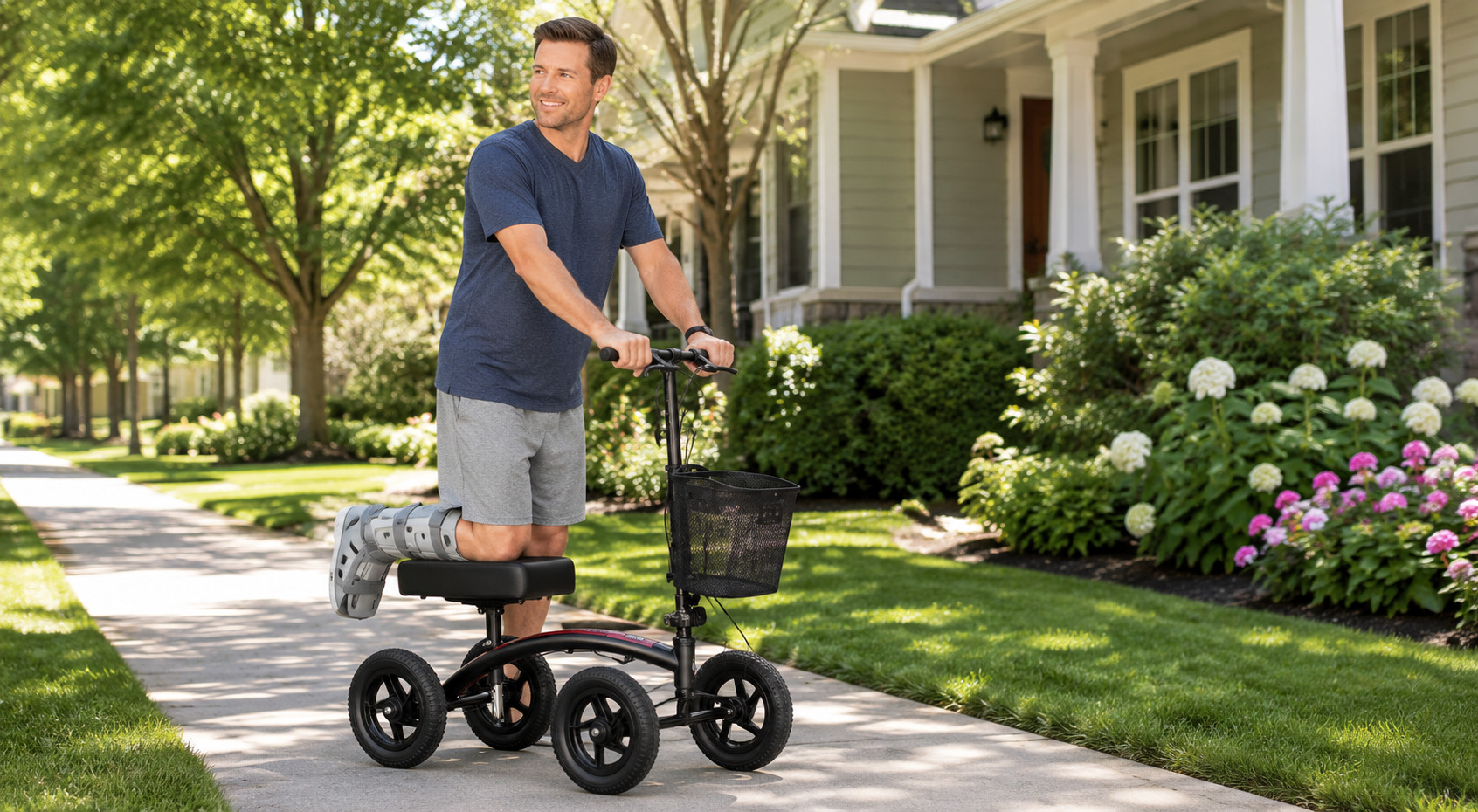
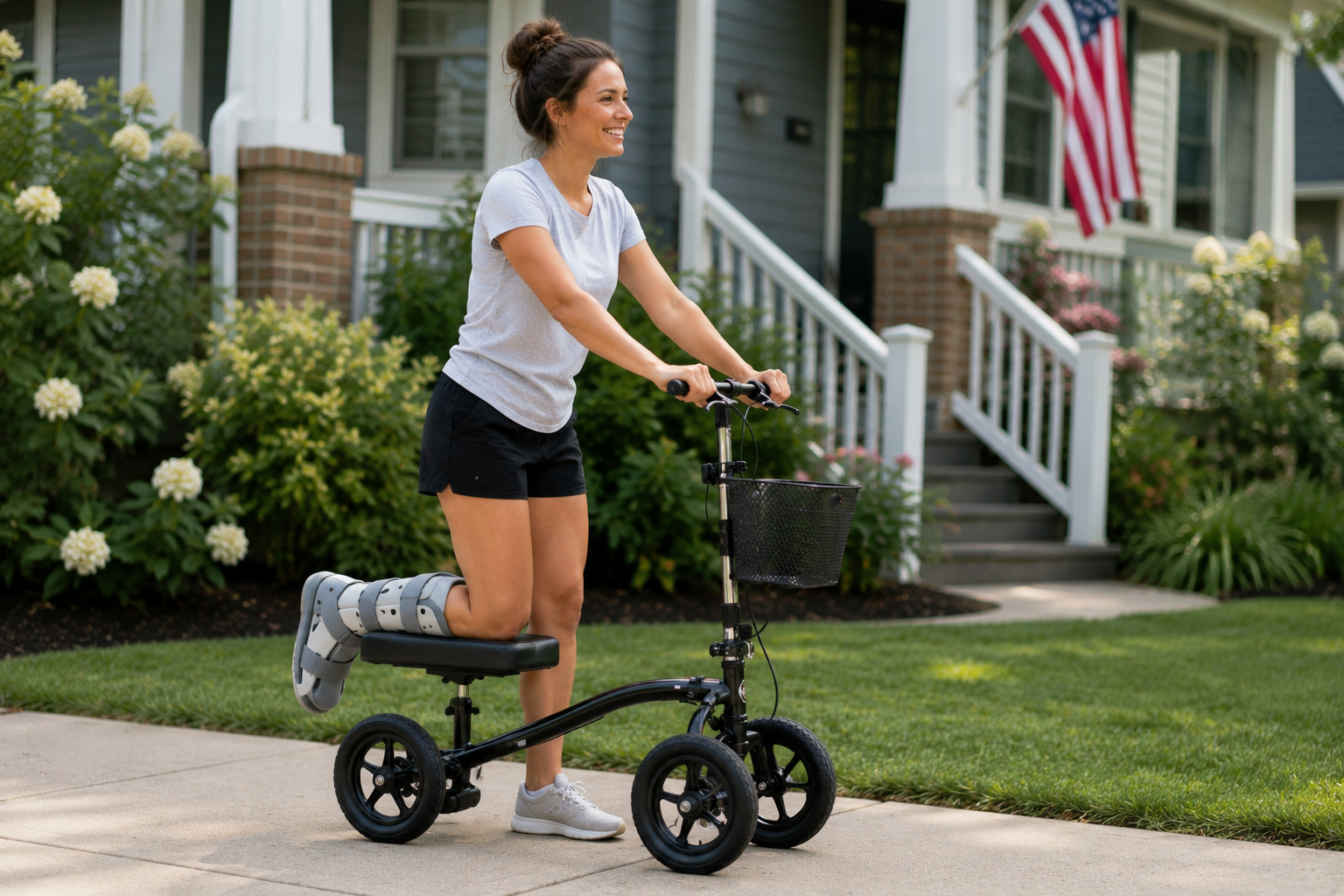
A knee scooter is built for flat, stable ground. Your injured leg rests on a padded platform, your good leg pushes, and the wheels roll forward. That setup depends on a level surface under all three or four wheels at once.
Stairs remove that surface entirely. The moment a wheel hits open air or a different height, the scooter tips. There’s no platform position, no grip angle, and no amount of caution that changes this. It’s a stability problem, not a skill problem.
Manufacturers are blunt about this for a reason: knee scooters are explicitly not rated for stairs, ramps steeper than a gentle slope, or escalators. Attempting it risks a fall onto the exact leg you’re trying to protect, plus a second injury layered on top of the first.
So the real question isn’t “how do I do this safely?” It’s “what do I do instead?”
What To Do Instead Of Rolling A Knee Scooter Upstairs
Leave the scooter at the bottom (or top) and switch methods. Most people end up using one of the following for the stairs themselves, then getting back on the scooter once they’re on flat ground again.
- Crutches for short stair sets. If you have decent upper-body strength and good balance, a single set of stairs with crutches and a handrail is manageable for most ankle and foot injuries. Go up leading with your good leg, down leading with the injured one.
- Hold the handrail and hop with support. For very short staircases, some patients use a handrail plus a helper rather than crutches. This depends entirely on your specific injury and what your doctor has cleared, so check first.
- Sit and scoot. For longer or steeper staircases, sitting down and pushing yourself up one step at a time, leg out in front, is slower but far more stable than standing on one leg the whole way.
- Keep a second device upstairs. If your injury is going to keep you upstairs and downstairs regularly, some patients rent or borrow a second scooter for the other level rather than carrying one up and down. It sounds excessive until you’ve tried hauling 15 pounds of metal up a flight of stairs on one leg.
None of these is glamorous. All of them beat trying to balance a wheeled platform on a step edge.
Reorganize Before You Need To Climb
The fewer trips up and down stairs you make, the less risk you’re taking on. A little setup in the first day or two of recovery saves a lot of frustration later.
Set up a base camp on one level
Pick whichever floor has your bathroom, and bring down what you need for the next several weeks: phone charger, a few changes of clothes, snacks, your laptop if you work from home. The goal is to make trips upstairs the exception, not the routine.
Move the essentials within reach
Water bottle, medication, phone, and anything else you’d normally walk across the house for should live within arm’s reach of wherever you’re spending most of your day. The knee scooter handles every flat-ground trip you need to make, so the less you’re stuck improvising, the smoother those weeks go.
Tell the people in your house about the plan
If you live with a partner, roommate, or kids, let them know stairs are now a planned event, not a quick dash. A five-second heads-up avoids someone watching you balance on a step with your arms full.
What If Stairs Are Unavoidable Every Day?
Some homes don’t have a ground-floor option. If you’re climbing stairs multiple times a day no matter what, a few extra precautions are worth the time.
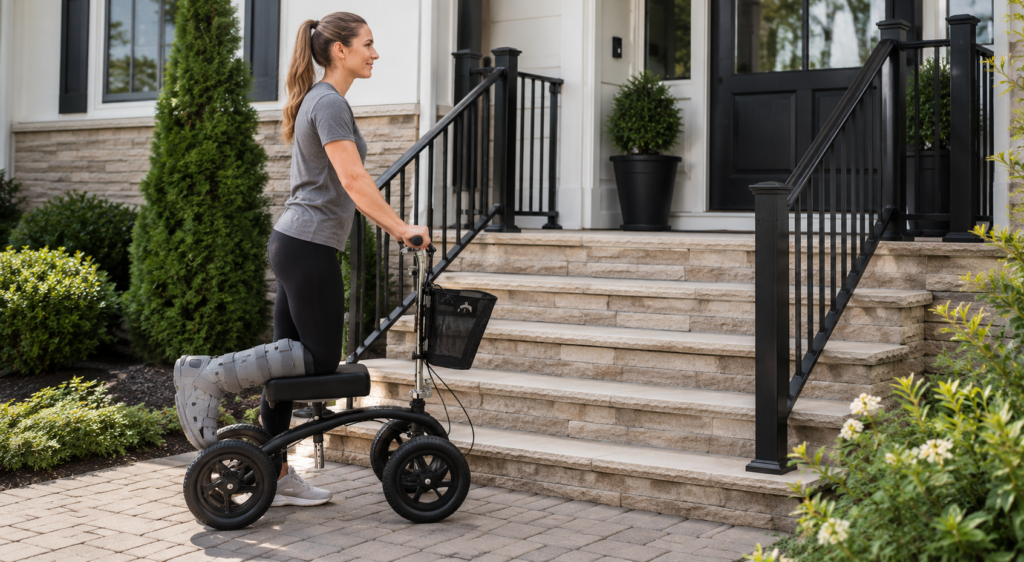
- Install a second handrail if only one side has one, even temporarily.
- Do stairs only when you’re not rushed, not tired, and not carrying anything in your hands.
- Consider a stair lift rental if the injury is going to keep you non-weight-bearing for an extended stretch and stairs are genuinely unavoidable several times a day.
- If balance is a bigger concern than leg strength alone, a seated knee scooter or rollator might suit daily life better than a standard model, even though neither one solves the stairs problem directly.
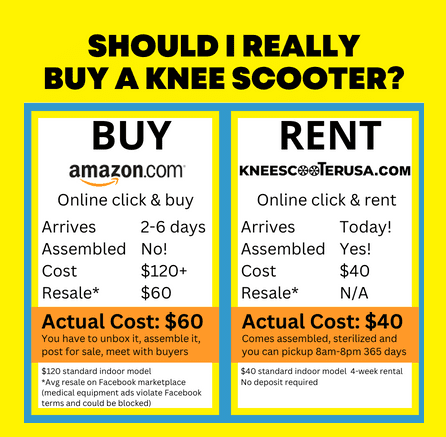
PRO TIP: Most ankle and foot injuries that call for a knee scooter resolve in three to four weeks. That’s a short enough window that renting rather than buying makes sense for the scooter itself, and it’s also short enough that setting up a one-level routine for those few weeks is far easier than retrofitting your whole house.
A Quick Note On Timing
How much stair traffic you can realistically manage changes as recovery progresses. In the first couple of weeks, when the foot needs to stay completely off the ground, stairs should be minimized as much as possible.
By the time you’re a few weeks in, most people regain enough confidence and strength to manage short stair sets more comfortably, even while still on the scooter for everything else.
If you’re not sure where you fall in that timeline, your orthopedist’s guidance takes priority over any general rule here. Every injury heals at its own pace.
Stairs Aside, The Rest Of Your Day Doesn’t Have To Be Hard
Stairs are the one part of recovery that a knee scooter genuinely can’t help with. Everything else, kitchen to bathroom, bedroom to front door, couch to car, is exactly what the scooter is built for.
Set up your main floor, plan your stair trips instead of winging them, and let the scooter do the rest. Knee Scooter USA offers same-day local pickup with no deposit and no waiting on shipping, so you can get moving on flat ground while you figure out the stairs question for your specific home.