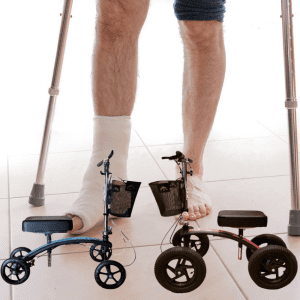
Most people have never heard the term “non-weight-bearing” until a doctor says it to them. Then it suddenly becomes the most important instruction in the room. A few hours later, reality starts setting in.
The kitchen is farther away than it looked. Stairs are annoying. Carrying anything with both hands feels impossible.
That’s why knee scooters have become such a common recovery tool. Once everyday movement starts feeling complicated, finding out where you can rent a knee scooter for a broken foot becomes the obvious next step.
Knee Scooter Rentals for a Broken Foot: Your Best Options Right Now
A broken foot, ankle fracture, or post-surgery recovery doesn’t wait for business hours, and neither should you. Whether your injury happened this morning or you’re prepping for a scheduled procedure, getting a knee scooter fast is the priority.
Here are the three best rental options available, ranked by speed and convenience.
Knee Scooter USA: Same-Day Local Pickup (Fastest and Most Affordable)
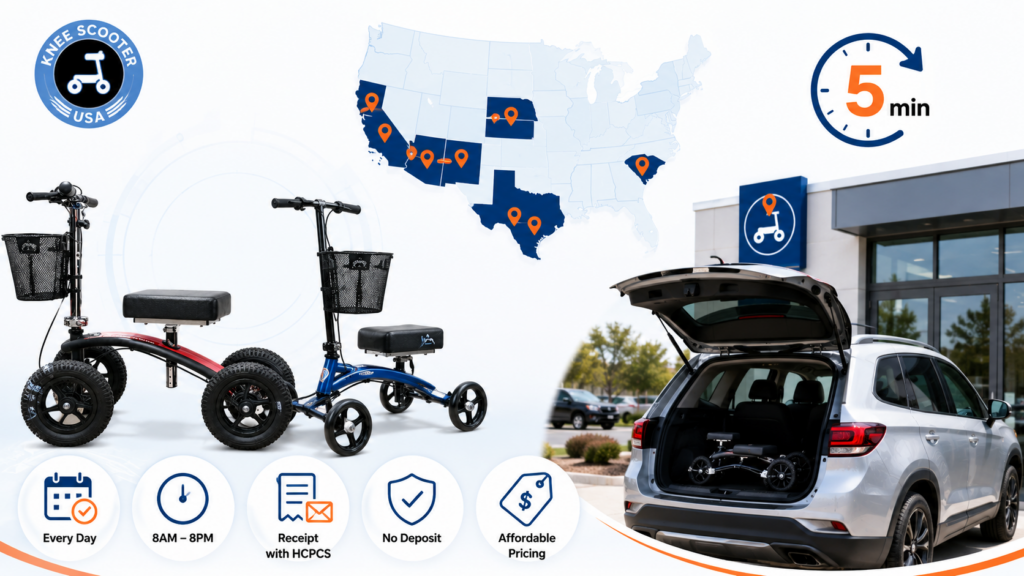
If you’re in one of our service areas, this is the option that gets you mobile today. Knee Scooter USA operates 12 local pickup locations across six states, with a rental process designed specifically for people who can’t afford to wait.
Where we operate:
- Arizona: Phoenix, Tucson
- California: Sacramento, San Jose
- Colorado: Colorado Springs, Denver, Fort Collins, Wheat Ridge
- New Mexico: Albuquerque
- South Carolina: Greenville
- Texas: Austin, Arlington
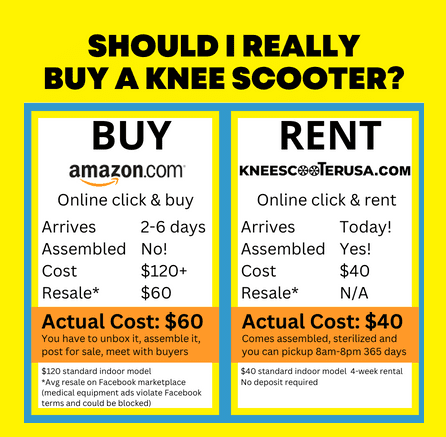
What makes us stand out isn’t just the locations; it’s the logistics. Book online and your scooter is ready for pickup within 5 minutes. No appointment.
No in-person visit to fill out paperwork. Pickups run 8 a.m. to 8 p.m., every single day of the year, including weekends and holidays. And if you can’t make it yourself, send a friend or family member, and we’ll have it ready for them.
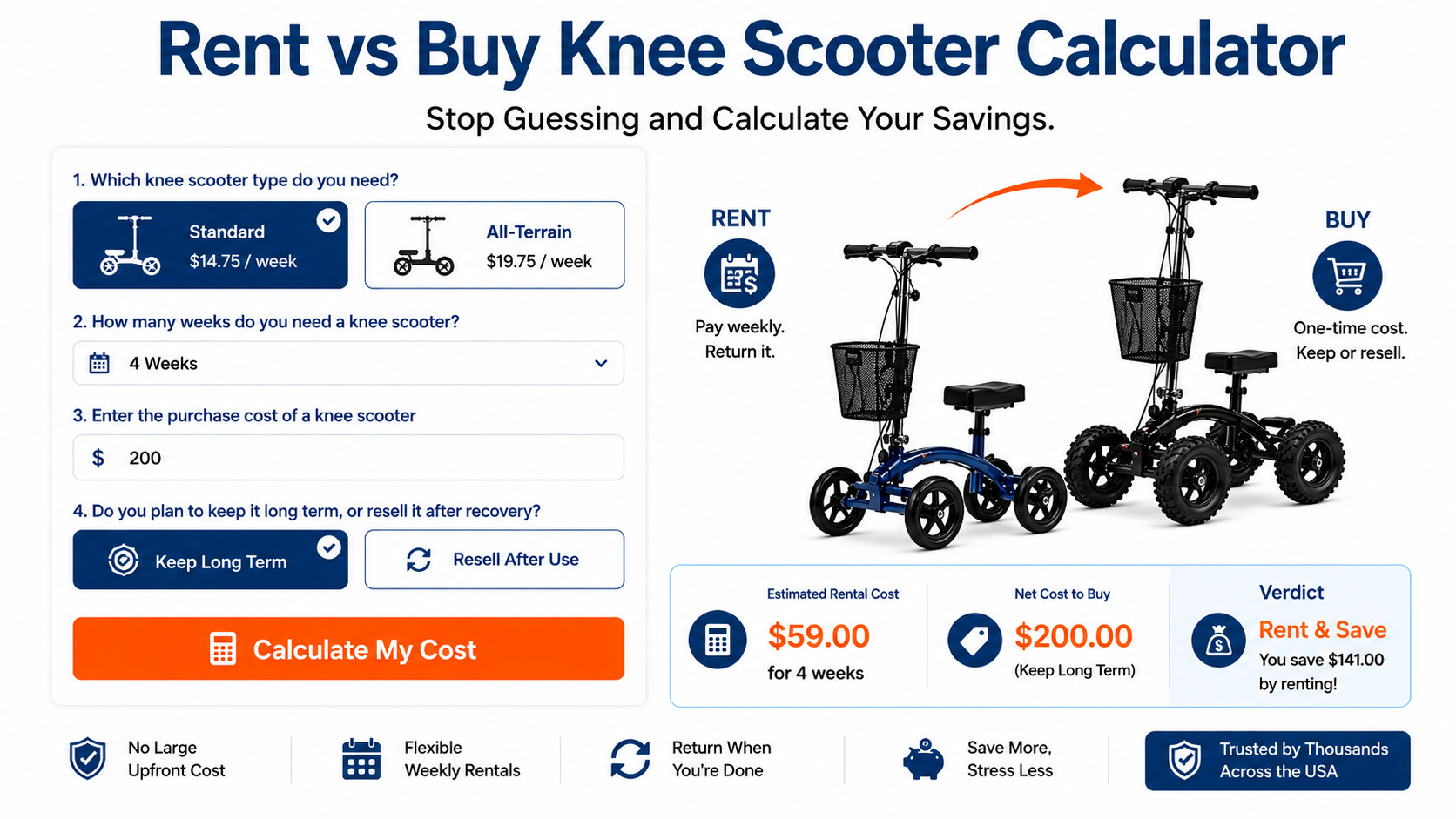
Pricing starts at $14.95/week with no deposit and no surprise fees.
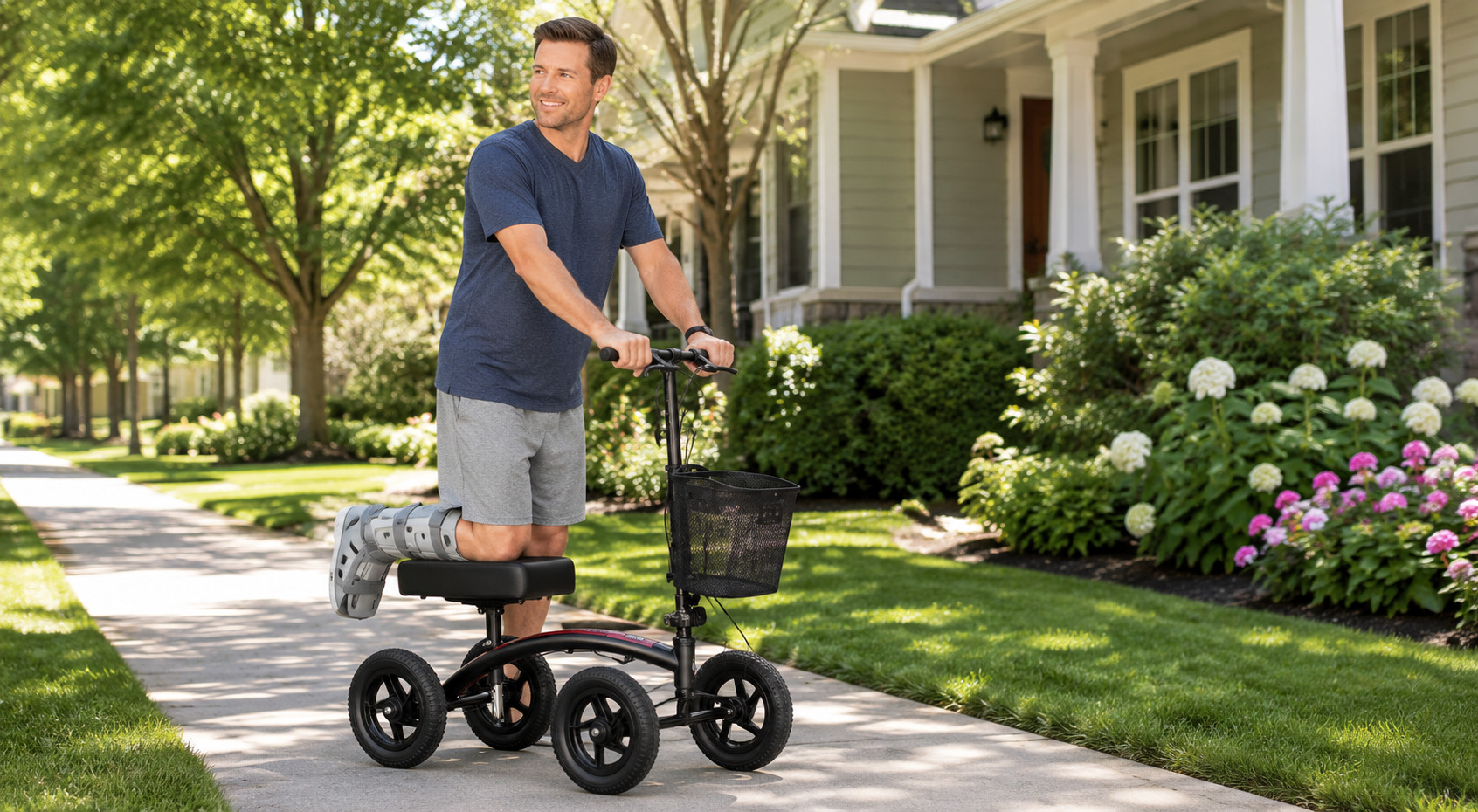
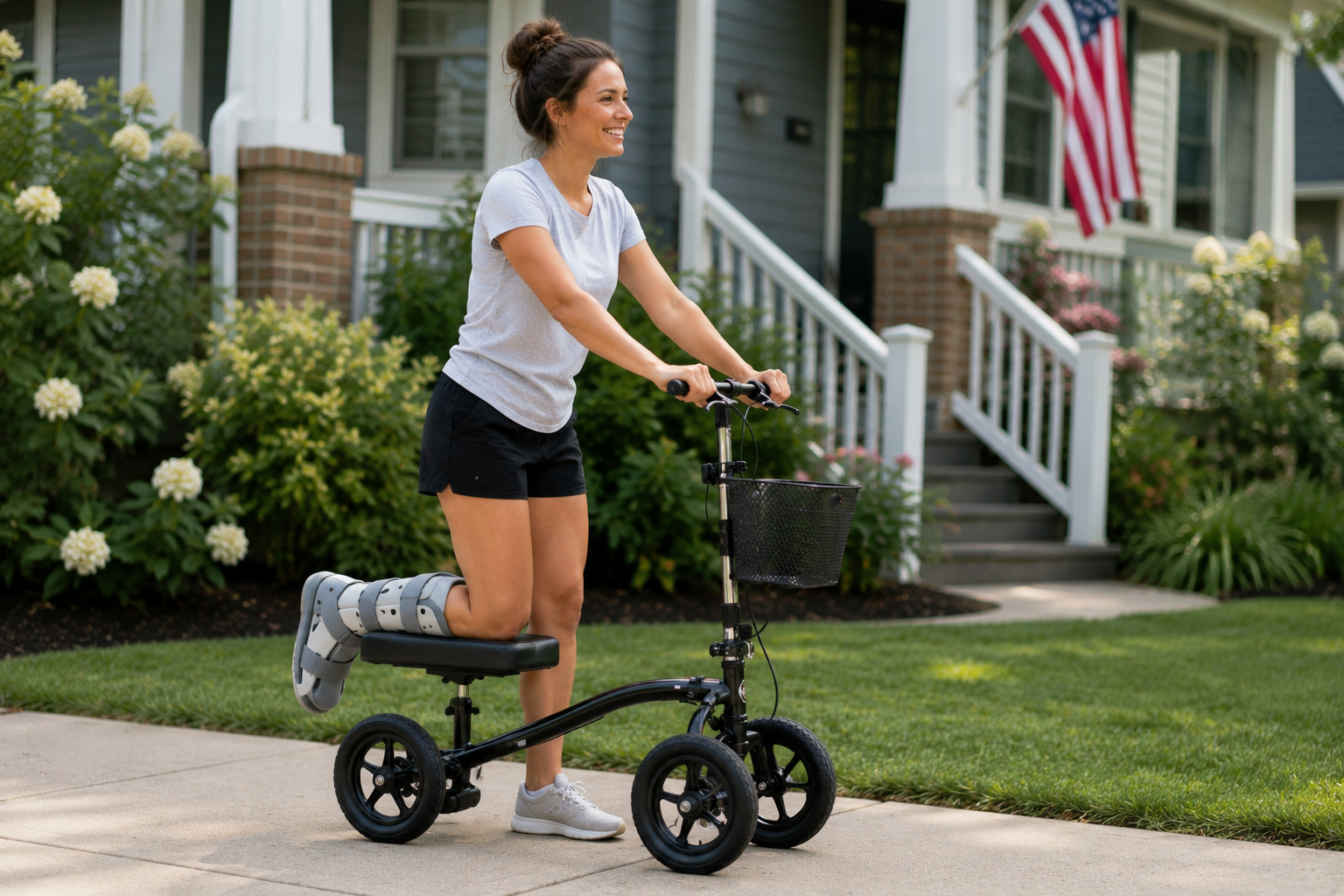
Two models are available: the Standard (ideal for indoor recovery on carpet, tile, hardwood, and sidewalks) and the All-Terrain (built for gravel, grass, and active outdoor use).
When you return the scooter, you’ll receive an email receipt with HCPCS billing codes for insurance reimbursement.
Pro tip: Don’t wait until your appointment is over to start the process. You can book online from your phone in the waiting room and have a friend pick up the scooter before you even get home.
Local Medical Supply Stores and DME Providers
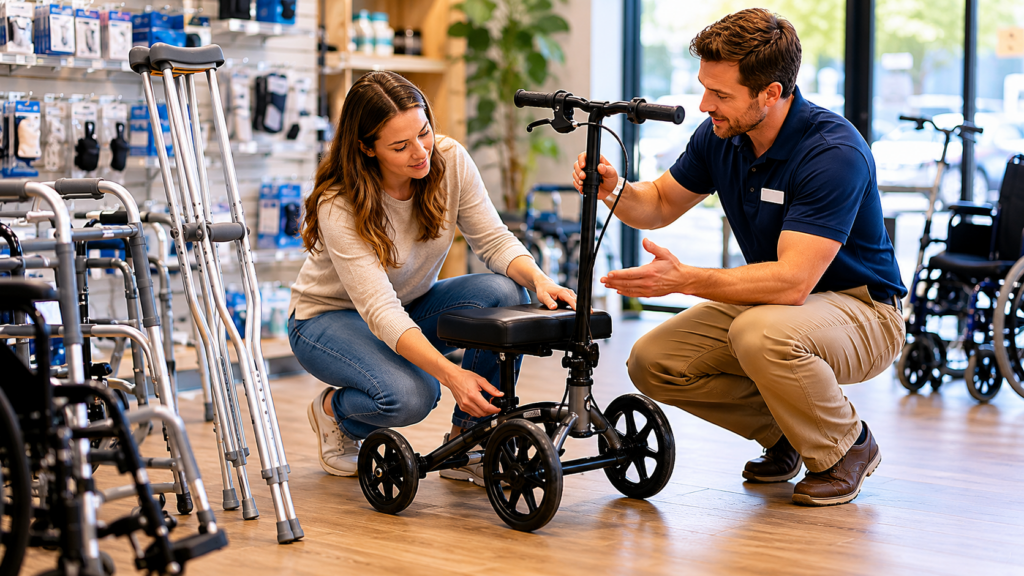
For those outside our current service areas, local medical supply stores, also called DME (Durable Medical Equipment) providers, are the next place to look. Most mid-size and large US cities have at least one, and a quick search for “DME provider near me” or “medical supply store near me” will pull up options in your area.
These stores carry knee scooters alongside other medical equipment like walkers, crutches, and wheelchairs. A few things to keep in mind before you go:
- Most require you to visit in person to get sized and sign the rental agreement
- Operating hours are typically weekday business hours; closed on weekends and after 6 PM
- Many charge a refundable deposit of $75 to $100 on top of the weekly rental fee
- Stock isn’t always guaranteed, so calling ahead is worth it
It’s a workable option, but the limitations are real. If you broke your foot on a Saturday evening and need a scooter by Sunday morning, most DME stores simply won’t be open. Plan accordingly.
Online Knee Scooter Rental Services (Mail-Order)
If you’re not near a local pickup option, a handful of national services will ship a knee scooter straight to your front door. A quick Google search for “knee scooter rental mail order” pulls up several options that ship across most of the continental US.
Here’s what the mail-order experience actually looks like:
- Delivery runs 2 to 5 business days, depending on your location; not same-day, not next-day
- Most services cover free two-way shipping, so returning the scooter doesn’t cost extra
- The scooter arrives in a box and needs assembly; manageable for most people, but genuinely difficult when you’re already non-weight-bearing
- Weekly rates sit in a similar range to local store pricing
It’s a reasonable option if you’re scheduled for foot surgery next week and have time to plan ahead. Fractured your foot this afternoon and need to get around your house tonight? That’s where mail-order falls short.
The shipping window alone means two to four days without real mobility, and assembling a scooter on one leg isn’t how anyone wants to spend their first day of recovery.
For most people dealing with an unexpected broken foot or ankle injury, same-day local pickup is the only option that actually fits the situation, and Knee Scooter USA’s combination of locations, hours, and pricing makes it the most practical first call.
How To Use a Knee Scooter: Setup, Safety, and Daily Use
Renting is the easy part. Getting on it correctly from day one is what actually matters. A scooter adjusted incorrectly causes back pain, hip strain, and real instability on top of an injury you’re already dealing with.
Five minutes before your first ride fixes most of that. Start here, not on the move.
Setting the Knee Pad Height
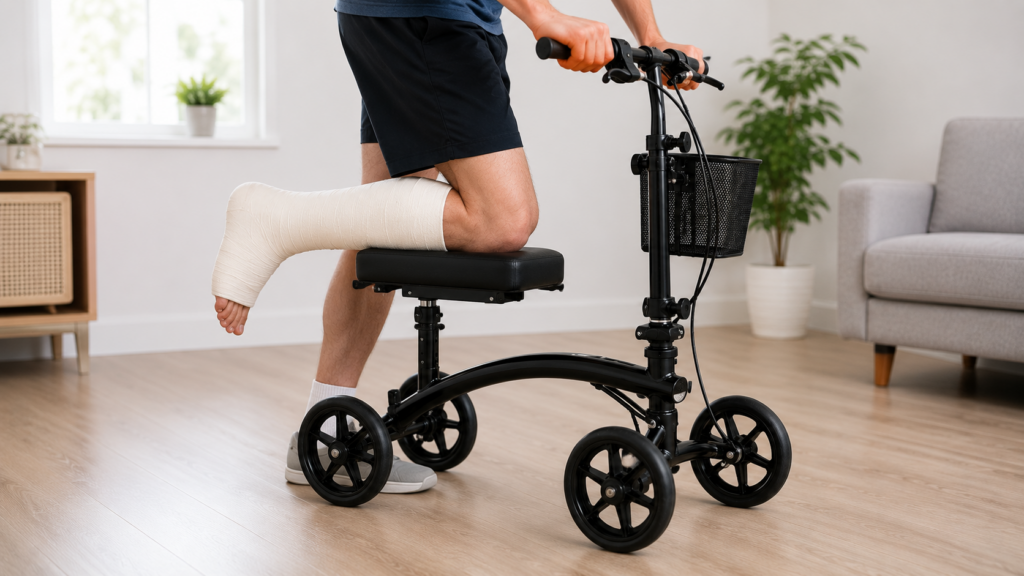
Most people rush this. They shouldn’t. Stand upright, bend your injured leg like it’s resting on the pad, and measure from the bottom of that knee to the floor. Set the pad to that exact height. That’s the whole process.
- Your injured leg rests on the pad at a natural 90-degree angle
- Your good foot sits flat on the floor when you’re standing still
- Too high and your hips tilt; your lower back feels it within the hour
- Too low and you pitch forward, which kills steering control fast
Lock the adjustment knob properly once it’s set. A pad that shifts mid-ride doesn’t give you a warning before it’s a problem.
Adjusting the Handlebars
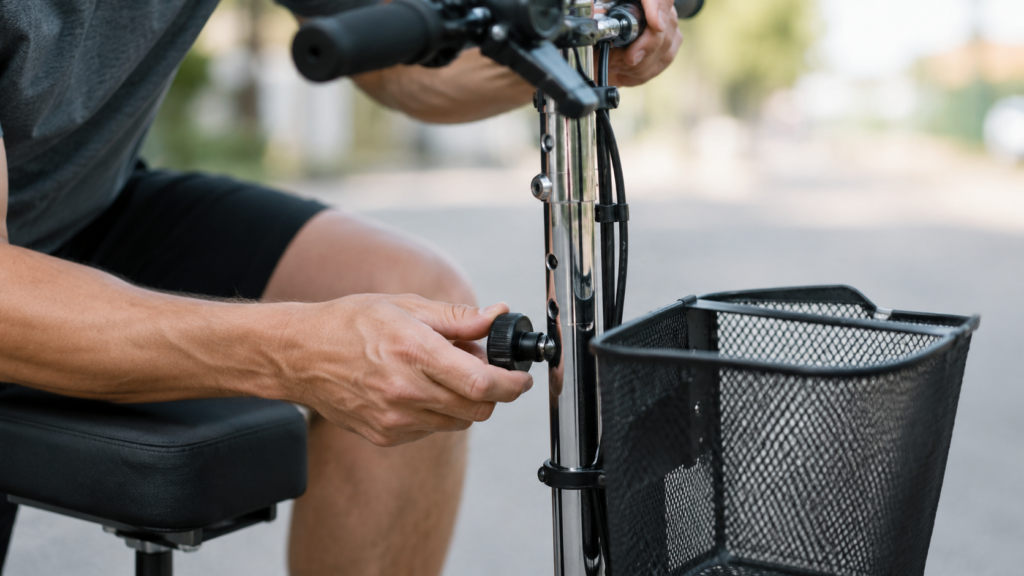
This one’s a posture issue, not just comfort. Set them too low, and you’ll hunch forward for weeks. Neck strain and shoulder tension, both building through a recovery that could run four to eight weeks. Not worth it.
- Handlebars at roughly waist to belly button height
- Arms with a slight bend at the elbows, not reaching or cramped
- If your shoulders feel tight after ten minutes, go higher
- Tighten the knob fully; a loose column wobbles on every turn
Using the Hand Brake
People ignore the brake until something happens. By then, it’s too late. The brake isn’t for emergencies; it’s for every stop you make, including the ones that feel routine.
- Apply the brake before your foot touches down, not after
- On ramps or slopes, squeeze gradually; a hard grab pitches you forward
- Smooth tile moves faster than carpet; brake earlier than you think you need to
- On any slope, keep the brake on when parked; the scooter rolls without it
Most accidents on knee scooters happen at stops, not while rolling. This one habit changes that.
Getting Around Your Home
In the first few days on a scooter, your own home feels unfamiliar. Surfaces you’ve walked on for years behave differently on wheels. A few things worth knowing before you find out the hard way.
- Carpet: Fine on standard pile; thick shag takes noticeably more effort to push through
- Tile and hardwood: Fast and smooth, but a wet patch near the sink or tub is genuinely slippery
- Door thresholds: Roll over them at a slight angle; hitting them straight on can stop the front wheels dead
- Bathrooms and kitchens: Tight turns in small rooms need patience; hallway speed doesn’t translate
Pro tip: Put a dry towel outside your bathroom before you shower. Wet tile under a wheeled scooter on one leg is exactly as risky as it sounds.
Getting In and Out of a Vehicle
Takes a couple of tries to get the routine down. Becomes easy fast.
- Fold the handlebar column down before loading the scooter into the back seat or trunk
- Get the scooter positioned outside the car door before you stand up to exit, not after
- Don’t manage the door and the scooter at the same time while balancing on one leg
Once you’ve done it two or three times, it takes maybe 60 seconds. The first time just needs a bit of patience.
Stairs: Don’t Try It
Knee scooters don’t do stairs. That’s not a suggestion; it’s just how they’re built. If your home has two floors, come down seated, one step at a time on your backside. Or use a stair lift if one’s available.
Some people rent a second unit to keep upstairs for the duration of recovery. No carrying the scooter up and down, no seated staircase trips at odd hours. It’s a straightforward call for anyone dealing with a longer recovery.
Set it up right, use the brake every time, and pay attention to your surfaces. Do those three things and the scooter works properly for as long as you need it.
Make Every Step Of Recovery More Manageable
A broken foot doesn’t change much on paper. You’re still living in the same house, driving the same roads, and dealing with the same daily responsibilities.
What changes is how long everything takes. A trip across a parking lot feels different. So does carrying groceries or getting through a workday.
That’s why the rental option itself matters. The easier it is to get a scooter and start using it, the easier those first few weeks tend to be.
For many people, Knee Scooter USA ends up being the practical choice because it removes a lot of the waiting, extra errands, and unnecessary complications from an already inconvenient situation.