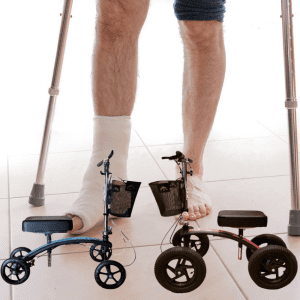
Most people don’t think about how they’re going to get from the bedroom to the kitchen until a doctor hands them a “non-weight-bearing” order and sends them home.
That’s usually the moment knee scooters enter the conversation, often right alongside crutches, walkers, and whatever else the discharge nurse mentions in passing.
Knee scooters solve a real problem, but they’re not automatically the right answer for everyone. Here’s an honest look at the pros and cons, so the decision is based on how recovery actually works day to day, not just which device looks the easiest in a parking lot demo.
7 Reasons a Knee Scooter Makes Daily Life Easier
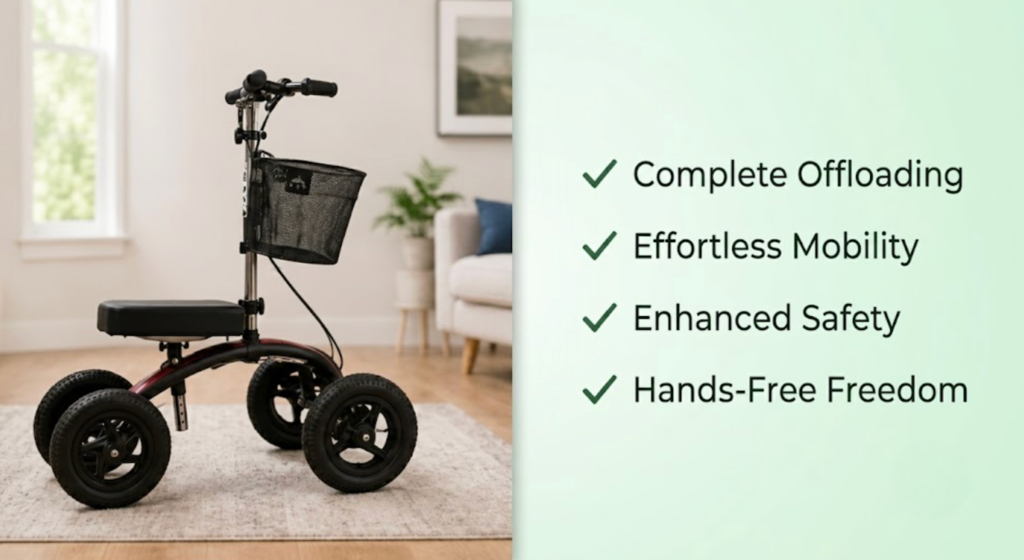
Here are seven reasons why a wheeled device makes non-weight-bearing recovery safer and more comfortable:
1. The Injured Foot Stays Fully Offloaded
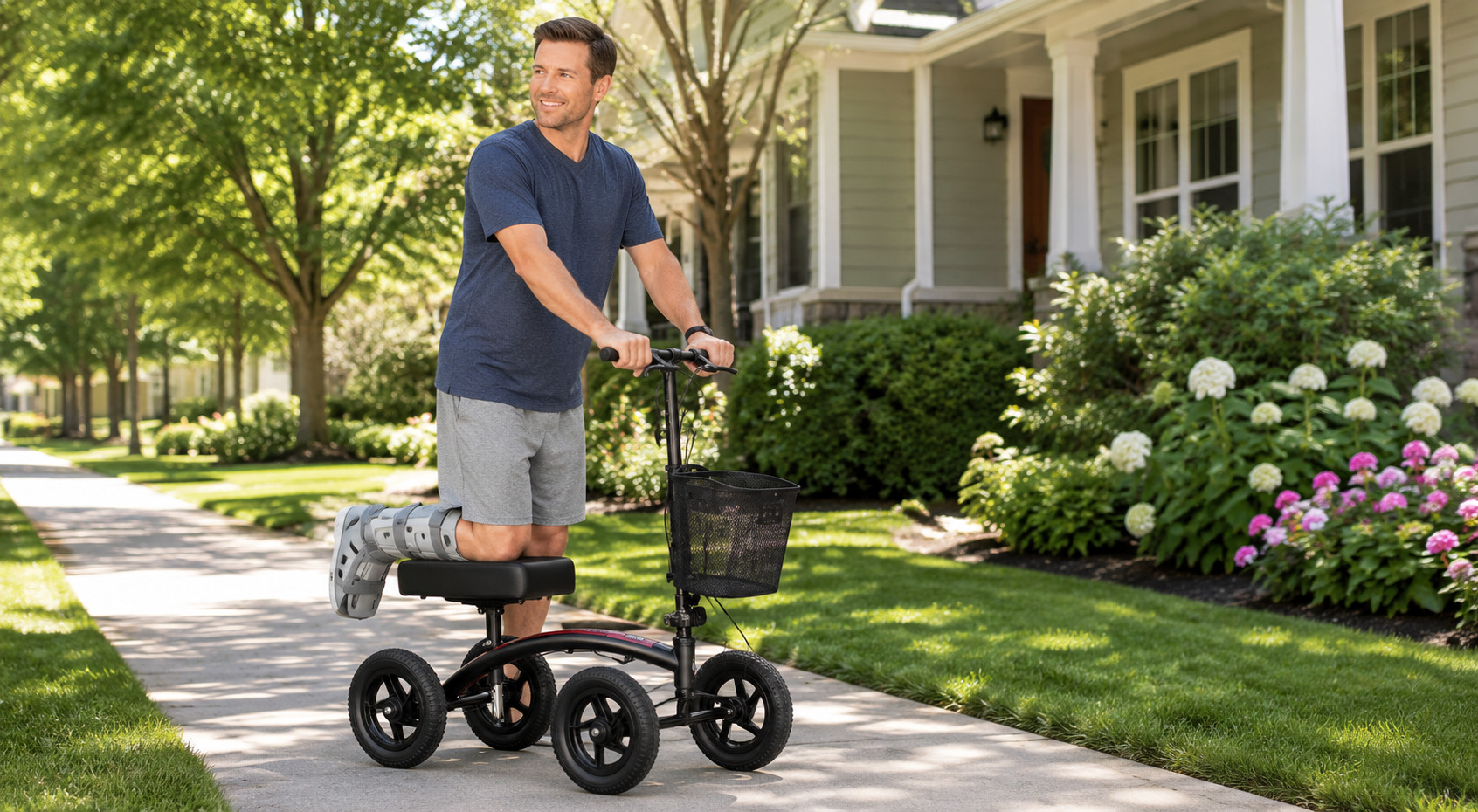
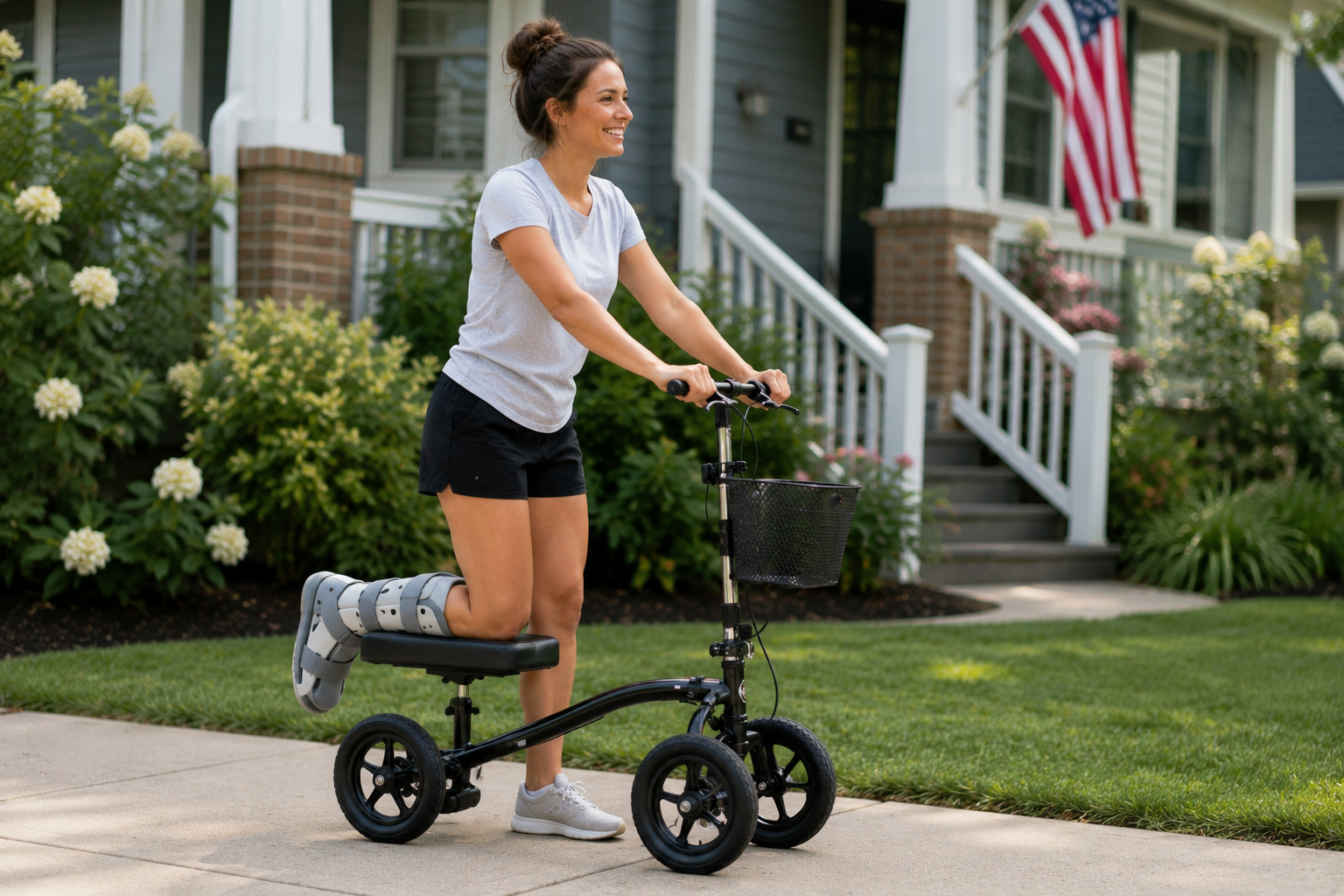
This is the entire point of the device, and it’s worth starting here. Crutches require some grip strength and shoulder stability to keep weight off the foot, and it’s easy to slip and put weight down by accident. A knee scooter physically removes that risk. The injured leg never touches the ground because it’s resting on the platform the whole time.
For ankle fractures, broken foot, and similar non-weight-bearing injuries, that consistency matters more than people expect early on.
2. Hands and Arms Stay Free
Crutches eat up both hands. A knee scooter only needs one hand on the handlebar to steer, sometimes two for balance, which leaves at least one hand free to carry a coffee mug, open a door, or hold a railing.
Most models also come with a front basket, so small errands around the house don’t turn into a two-trip ordeal.
3. Less Strain on the Upper Body
Crutches put a surprising amount of load on the wrists, shoulders, and underarms, and that load adds up over weeks. A knee scooter shifts the work to the legs instead, which is a more sustainable setup for anyone using a mobility aid for more than a few days.
4. Faster, More Natural Movement
Hopping on crutches is slow and tiring. Rolling on a scooter is closer to a normal walking pace, which makes errands, work-from-home days, and general house movement noticeably less exhausting. Most people notice the difference within the first day or two.
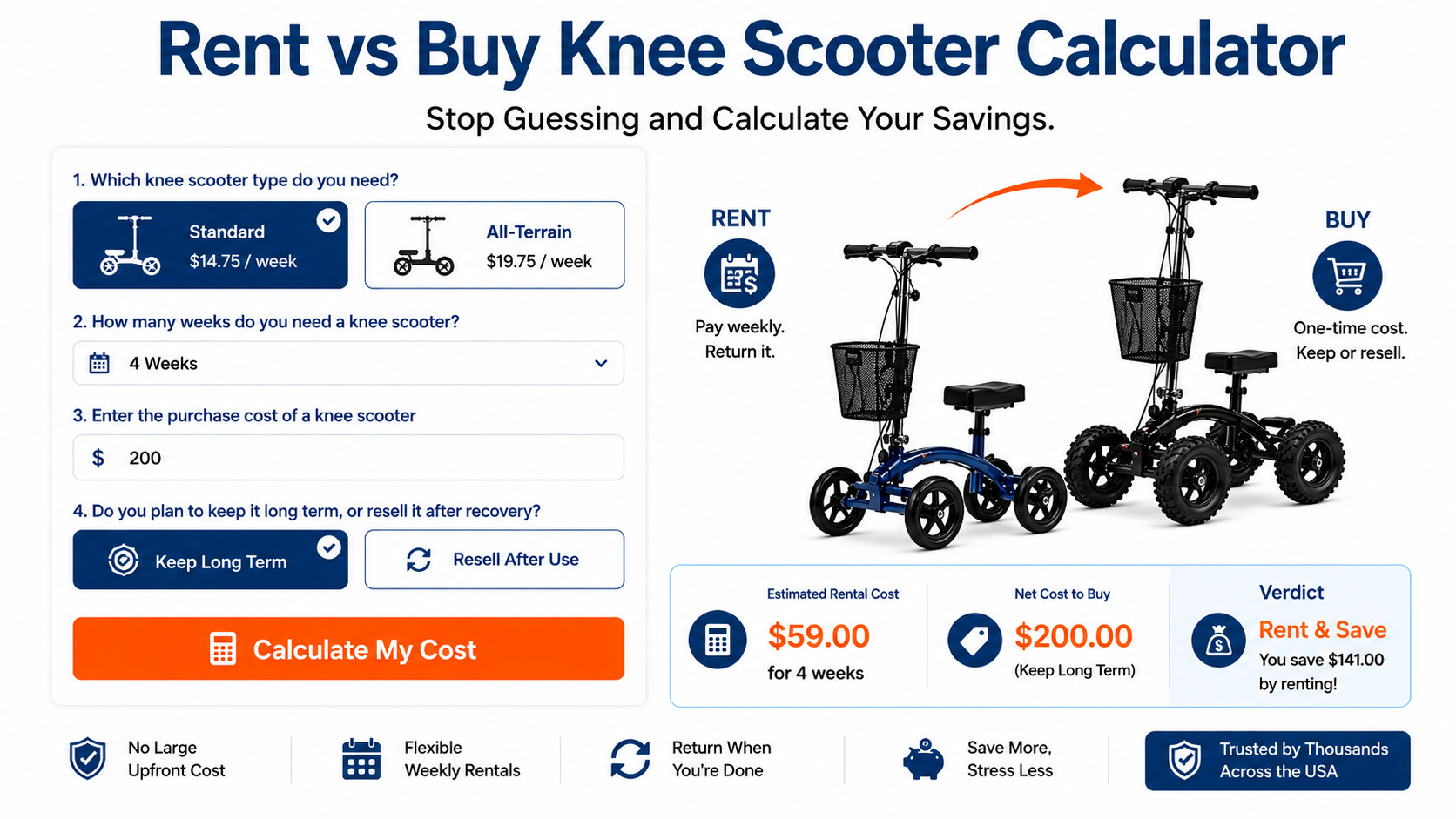
5. Renting Beats Buying, in Almost Every Case
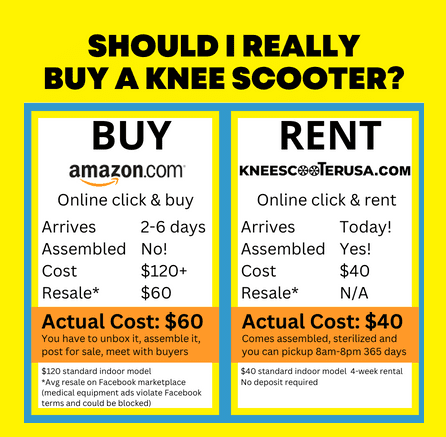
Most knee injuries that call for a scooter only need one for 3 to 4 weeks. Buying a scooter online usually means a 2 to 3-day shipping wait, followed by assembling it on one leg while injured, which is its own kind of unpleasant.
Once recovery is over, reselling it is harder than it sounds. Facebook’s Commerce Policies now flag and remove medical equipment listings, so resale typically lands under 50% of the original price even when a buyer can be found.
Renting locally through a service like Knee Scooter USA skips all of that. Pickup is same-day, the scooter is ready in minutes, and there’s nothing left to sell, store, or throw out once the cast comes off.
6. Available Year-Round, No Appointment Needed
Ankle and foot injuries don’t follow a schedule, and most medical supply stores close evenings and weekends. A rental model that’s open 365 days a year, with pickup available from 8am to 8pm, fits the reality of when injuries actually happen, which is rarely during convenient business hours.
7. Insurance Reimbursement Is Usually Available
Knee scooters typically come with HCPCS codes, the billing codes insurance companies use to process durable medical equipment claims.
That means a rental receipt can often be submitted for partial or full reimbursement, something that’s much harder to manage with a one-time Amazon purchase that doesn’t generate the same kind of documentation.
The Cons: 6 Factors to Keep in Mind During Recovery
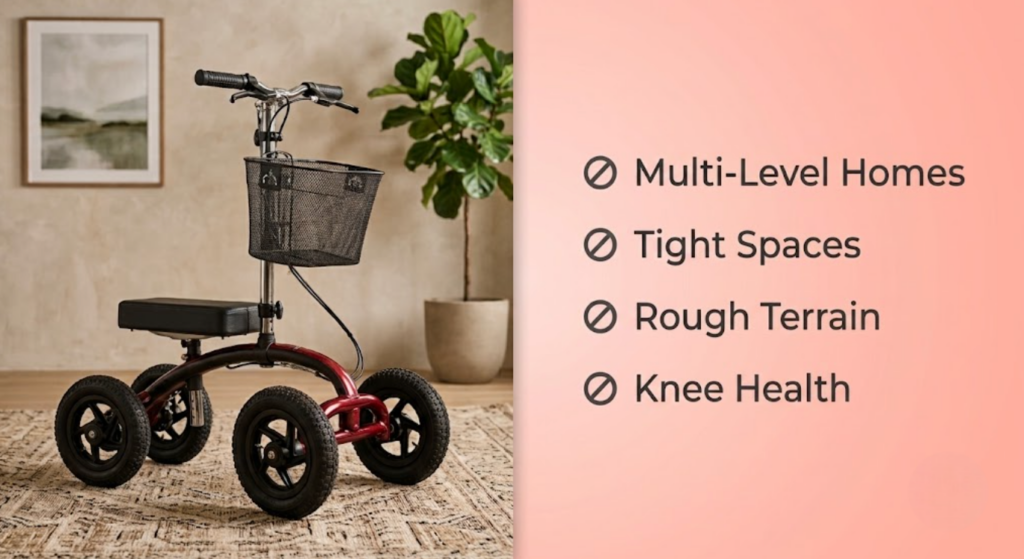
While a knee scooter is an excellent tool for most foot and ankle injuries, no single mobility aid fits every exact situation. To make sure you pick the right setup for your home and injury, keep these six practical factors in mind:
1. They Don’t Work for Every Injury
This is the biggest limitation, and it’s worth saying clearly: a knee scooter only works if the knee itself is healthy.
The platform relies on the knee joint to bear weight, so anyone with knee arthritis, a knee injury, or significant balance issues isn’t a good fit for the standard design. A seated knee scooter or a wheelchair is usually the better call in those cases.
2. Stairs Are Off the Table
Knee scooters move well on flat ground, sidewalks, and most indoor surfaces, but they can’t be taken up or down stairs.
Anyone living in a multi-level home without a downstairs bedroom and bathroom will need a plan for that specific problem, whether that’s temporarily relocating to one floor or pairing the scooter with crutches for stair use only.
3. Tight Spaces Take Some Getting Used To
A four-wheeled device with a turning radius takes more room to maneuver than a person walking normally. Narrow hallways, small bathrooms, and cluttered apartments can all feel tighter than expected for the first few days.
Most people adjust quickly, but it’s worth clearing walking paths at home before the scooter arrives.
4. Standard Models Aren’t Built for Rough Terrain
A standard knee scooter with solid rubber tires handles carpet, tile, and sidewalks well, but gravel driveways, grass, and uneven trails are a different story.
That’s a real con for anyone who needs to get outside regularly during recovery, though it’s solved fairly easily by choosing an all-terrain knee scooter with larger, air-filled tires instead of switching to a different device entirely.
5. Some Upper-Body Effort Is Still Required
A knee scooter is easier on the body than crutches, but it’s not effortless. Pushing off with the good leg, steering, and controlling speed on slopes or ramps does take some coordination and leg strength.
Anyone with significant weakness in the non-injured leg should talk to their doctor about whether a scooter or a different device makes more sense.
6. It’s One More Thing to Manage During Recovery
Whether bought or rented, a knee scooter is an extra object to fit into daily life: something to store, clean, and eventually return or get rid of.
Renting removes most of this hassle since there’s no long-term storage or resale to deal with, but it’s still worth factoring in compared to, say, a walking boot that simply gets worn and put away.
Ready to Roll? Making Your Recovery Choice
Weighing the knee scooter pros and cons usually leads to a clear conclusion: unless you have an injured knee or a home dominated by stairs, a knee scooter is the safest, most comfortable path to keeping your independence while you heal. It simply removes the upper-body exhaustion and fall risks that make traditional crutches so frustrating.
If you are dealing with a standard 3-to-8-week recovery window, you don’t have to let an injury put your life on pause or deal with the upfront costs and assembly headaches of buying a device online.
To skip the wait and get moving immediately, Knee Scooter USA offers same-day local pickup, complete with insurance-ready receipts and no rigid due dates.