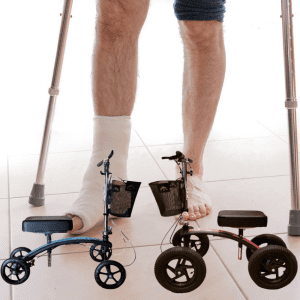
A fracture, a surgery date, or a sprain worse than expected: the injury decides a lot, but it rarely comes with a device attached. Most people leave a clinic and figure out the rest alone.
The tool below narrows that to five questions. Answer where the injury sits, how much weight you’re cleared to bear, and where you’ll be getting around, and it matches you to the right walking aids: a knee scooter, crutches, a walker, or a wheelchair.
What the Selector Actually Weighs
A quiz that just asks "what's hurt?" and spits out a product isn't worth much. Recovery doesn't move in a straight line, so the tool leans on five separate signals before it lands on anything.
- Injury location: A foot, ankle, or lower-leg injury behaves very differently than a knee-or-above limitation, and that alone rules a knee scooter in or out early
- Weight-bearing status: How much weight your provider has actually cleared you to put on the leg, since this is the single biggest factor across every device on the list
- Knee-platform comfort: Whether you can bend the knee and rest it on a padded platform for an extended stretch, because not everyone can, even with a foot or ankle injury
- Balance and upper-body support: Crutches and a walker both lean on your arms and core in a way a knee scooter simply doesn't
- Where you'll be getting around most: Carpet and sidewalks call for something different than gravel, grass, or a mixed route between the two
None of that requires a diagnosis or a login. If a couple of answers are unclear, particularly the weight-bearing question, the tool doesn't guess. It tells you to confirm that with your provider first rather than pointing you toward a device that might work against the injury instead of protecting it.
Take two people with the exact same diagnosis: a broken ankle, non-weight-bearing for six weeks. One of them can bend the knee and balance on one leg without much trouble. The other has a bad shoulder from an old injury and can't put real weight through an arm for long.
Same fracture, same timeline, but two different answers by the time the tool works through all five questions. That's the point of asking more than just "what's hurt."
Still deciding whether a scooter is even the right category for you? This breakdown of the pros and cons covers the trade-offs in more depth, and what a knee scooter actually is is worth a look if you've never used one before.
Standard or All-Terrain: How the Tool Narrows It Down
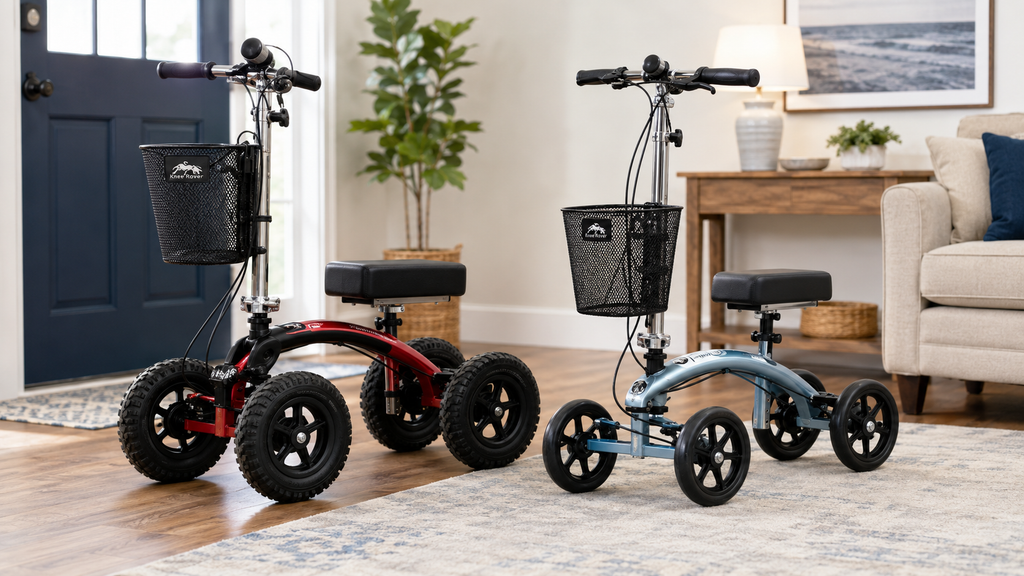
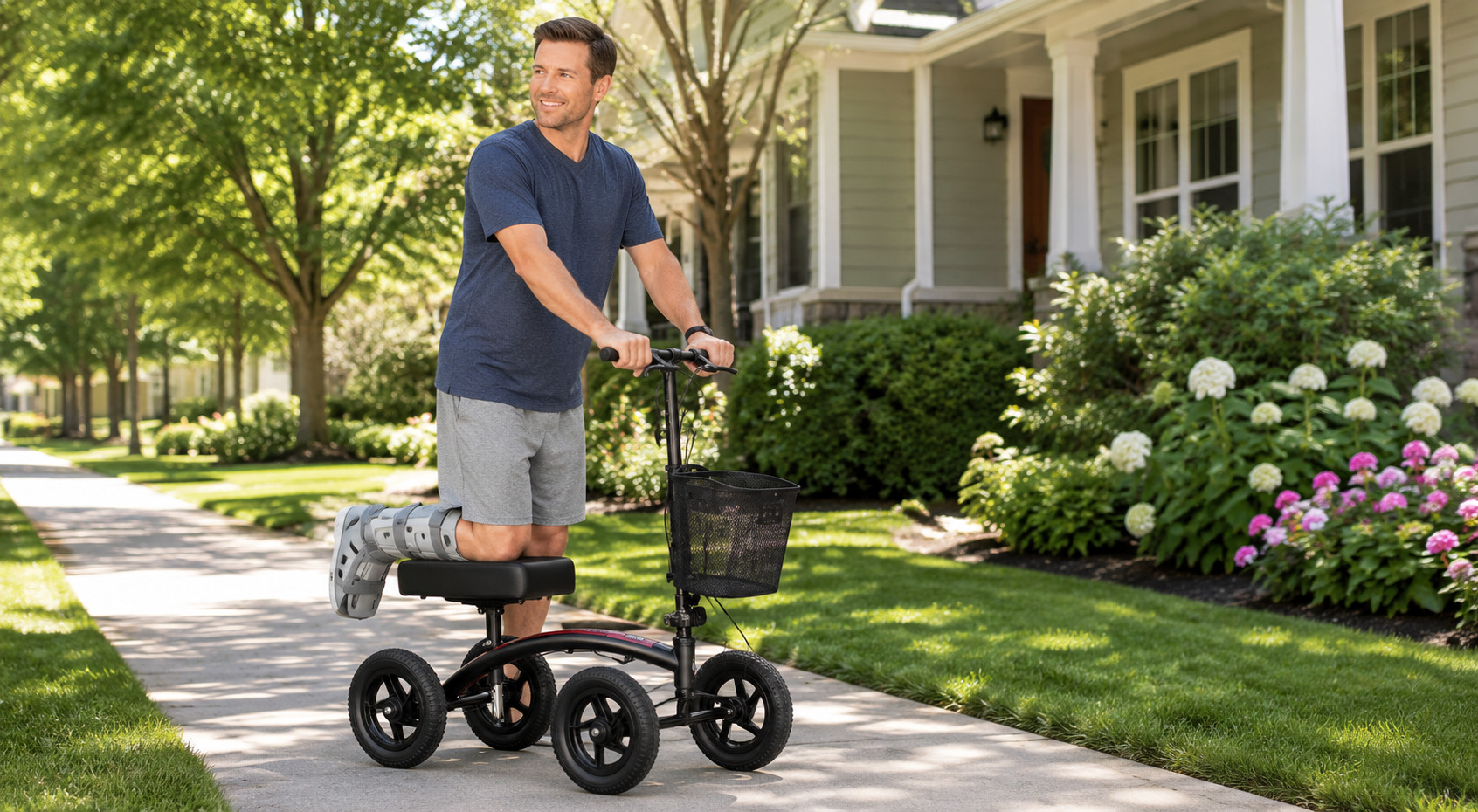
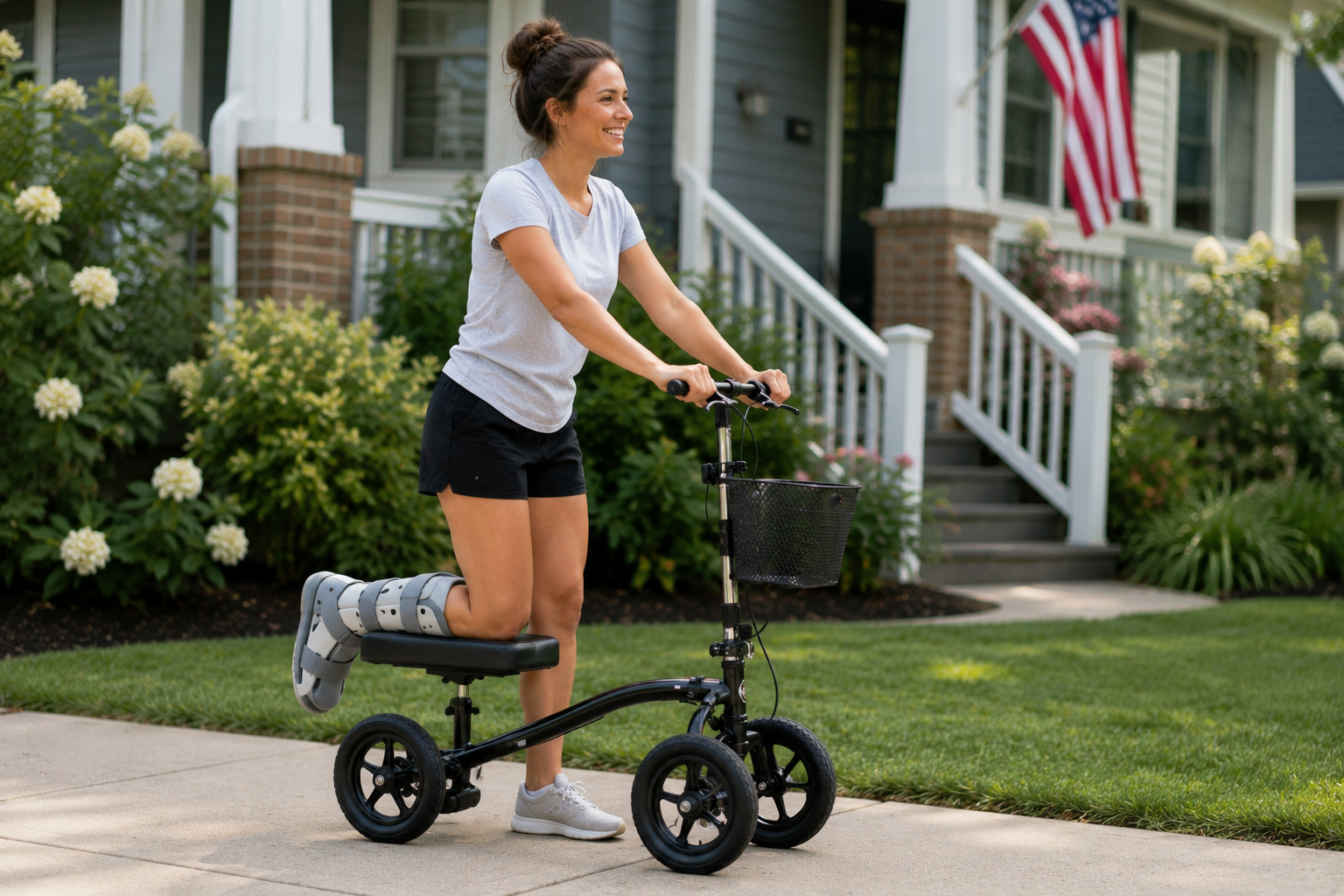
Say your answers point to a knee scooter. That's only half the recommendation, because Knee Scooter USA rents two different models, and the right one depends entirely on terrain, not on the injury itself.
- Mostly indoors or on smooth sidewalks: The tool leans toward the Standard model, which handles carpet, tile, and hardwood without any real learning curve
- Grass, gravel, or a mixed route between the two: The tool shifts to the All-Terrain model, built with larger tires for rougher ground
Both models share the same 350 lb weight capacity, so weight never decides which one you land on. It's purely about where you'll be rolling most days. That's the same distinction covered in the Standard vs. All-Terrain comparison, which goes deeper on tire size, turning radius, and everyday handling if you want the fuller picture before booking.
Height comes into play too, though it's a separate question from terrain. The Standard fits riders from 4'9" to 6'6", while the All-Terrain starts a little higher at 5'0" and tops out at the same 6'6". If your height or weight sits close to either edge, the size and fit calculator and the full scooter specs page both go further than a five-question tool reasonably can.
None of this is permanent, either. Plenty of renters start on the Standard because most of the first week or two is spent close to home, then switch to All-Terrain once they're cleared to get back outside onto the yard or a walking trail. Both models rent weekly with no due date attached, so a change in terrain partway through recovery doesn't mean starting the whole process over.
When a Knee Scooter Isn't the Right Call
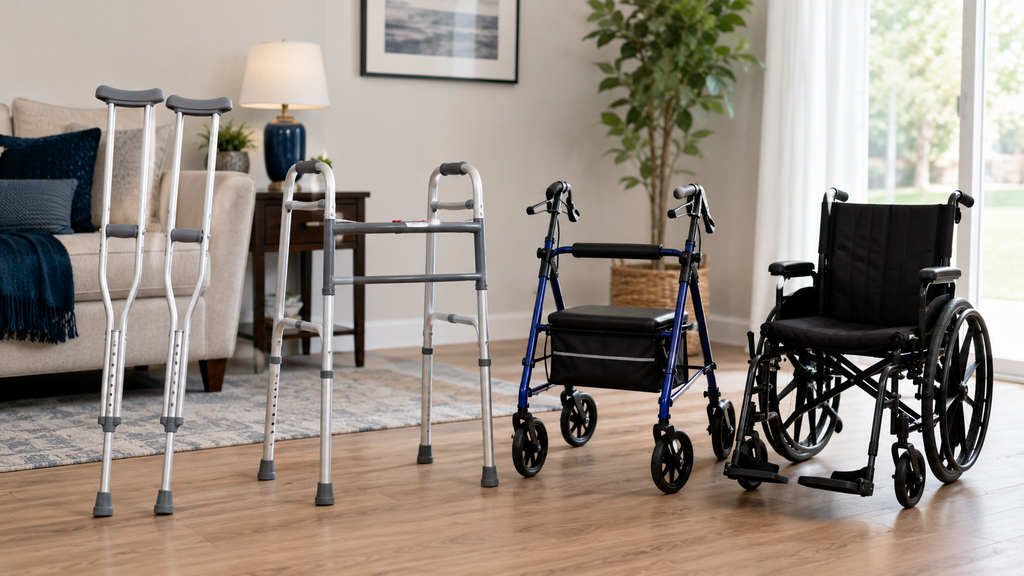
Not every result points to a scooter, and the tool isn't built to force one just because that's what the site rents. A few specific answers send the recommendation somewhere else entirely.
- Can't rest the knee on a platform: Crutches usually take over here, provided balance and upper-body strength are solid enough to support the switch
- Cleared for full weight but still want support: A walker tends to fit better than a scooter once you're bearing weight normally again
- Significant balance or support limitations: The tool points toward a wheelchair, or a direct conversation with your provider, instead of guessing at a self-propelled device
- Weight-bearing or knee-platform answer unclear: Rather than recommending anything, the tool asks you to confirm those details first
That last branch matters more than it looks. Getting the weight-bearing answer wrong isn't a minor mismatch; it's the difference between a device that protects the injury and one that quietly works against it.
It's also why the tool won't hand out a knee scooter recommendation just because someone lands on the site looking for one. A knee-above injury or a significant balance limitation changes the entire picture, and no amount of terrain preference or model comparison fixes that.
The honest answer in those cases is a different device, or a call to your provider before choosing anything at all.
If crutches, a walker, or a wheelchair turns out to be the better fit, this breakdown of crutches alternatives covers where a seated knee scooter, a walker, or a wheelchair fits better.
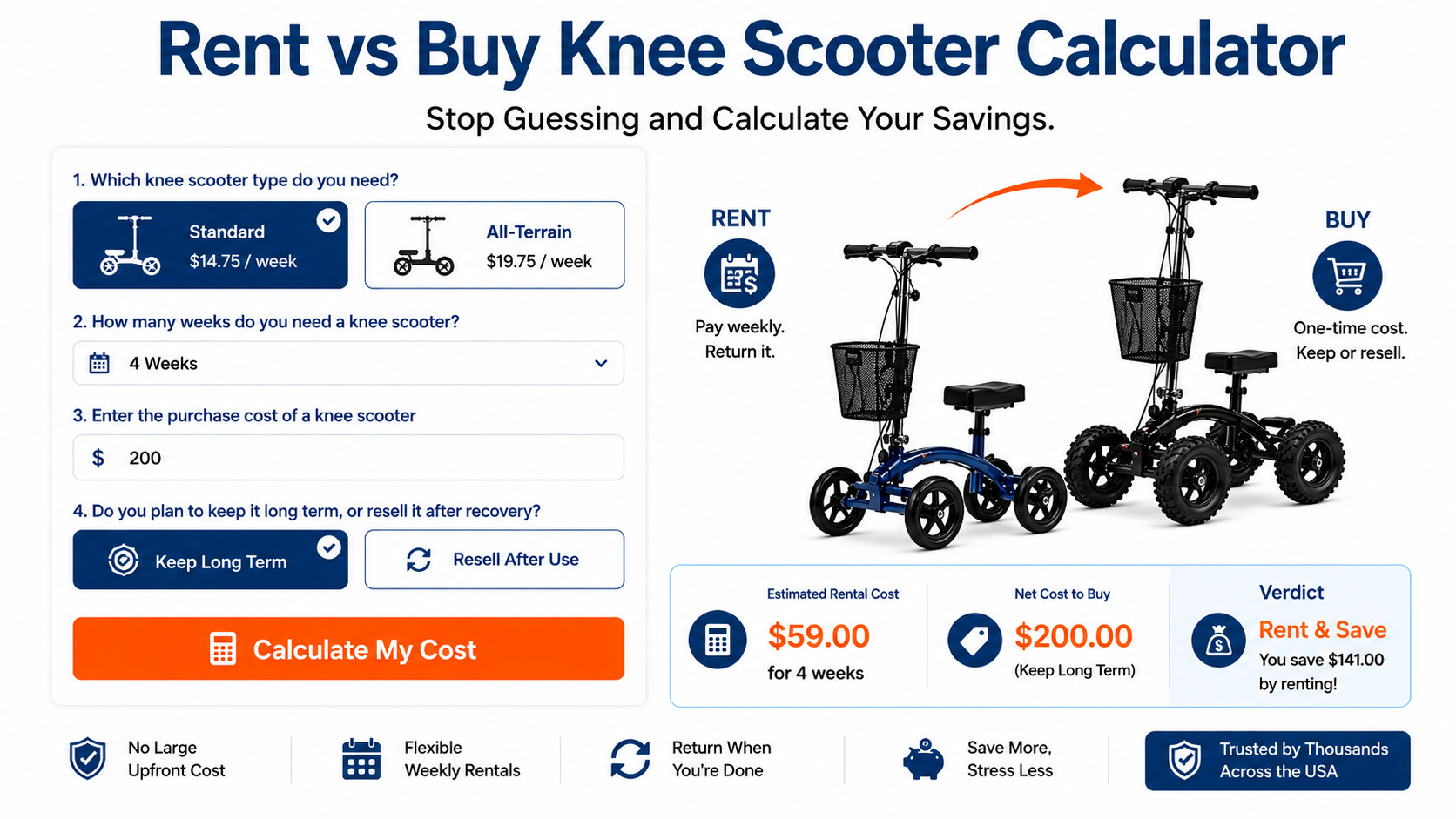
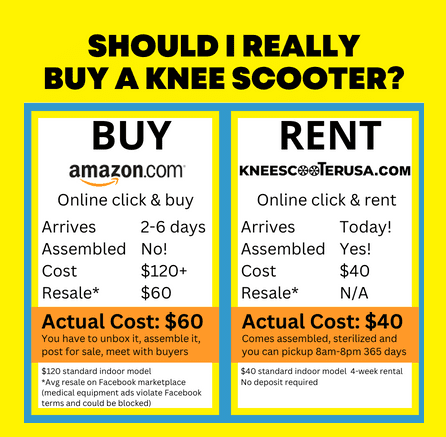
The savings calculator can put real numbers next to whichever option you're weighing, and if you're sizing up options for a smaller or younger rider, the guide to finding a knee scooter for kids covers fit considerations this tool doesn't touch.
None of these alternatives are a downgrade, either. Crutches, walkers, and wheelchairs each solve a different problem than a knee scooter does, and picking the one that actually matches your injury beats forcing a device that happens to be the more popular search term.
Get Moving With the Right Support
A five-question tool won't replace a real conversation with your doctor, and it isn't trying to. It cuts out the guesswork between several walking aids while you're already dealing with an injury.
Run through the questions above and treat your result as a starting point, especially if your weight-bearing status still feels unclear.
Once you know which device fits, renting a knee scooter online takes a few minutes, or you can pick one up same-day at any of Knee Scooter USA's 12 locations. The rental cost calculator and FAQ cover most of what comes next.